How to Choose HVAC Pipe Insulation in 2026?

Time:2026-10-16 Author:Charlotte
0%

Choosing Hvac Pipe Insulation in 2026 requires more than comparing thickness and price. It demands practical judgment. Pipe temperature, humidity, location, fire requirements, maintenance access, and energy targets all influence the correct specification. A chilled-water pipe in a humid plant room faces different risks from a hot-water pipe above a dry ceiling.

ASHRAE Fellow Dr. Steven T. Taylor, a respected HVAC design specialist, has emphasized, “Good HVAC design begins with controlling heat flow, not merely selecting equipment.” His point applies directly to pipe insulation. A poorly sealed joint can create condensation, corrosion, and energy loss, even when the insulation label looks impressive. Small gaps matter.

Look closely.

This guide will examine elastomeric rubber, fiberglass, mineral wool, and cellular glass options. It will compare thermal conductivity, vapor resistance, temperature limits, durability, installation quality, and lifecycle cost. It will also consider newer materials, recycled content, digital inspection tools, and changing building-efficiency expectations.

However, no product is perfect. A high-performance material can fail under careless installation. A budget solution may perform well in a protected, dry space. That uncertainty deserves attention. Site conditions often defeat laboratory assumptions.

Readers should verify manufacturer data, local codes, project specifications, and professional recommendations before purchasing. Reliable selection begins with measured conditions, not marketing claims. The best Hvac Pipe Insulation is the material that maintains temperature, resists moisture, survives its environment, and remains serviceable for years. Sometimes, the simplest detail is the one most likely to be overlooked.
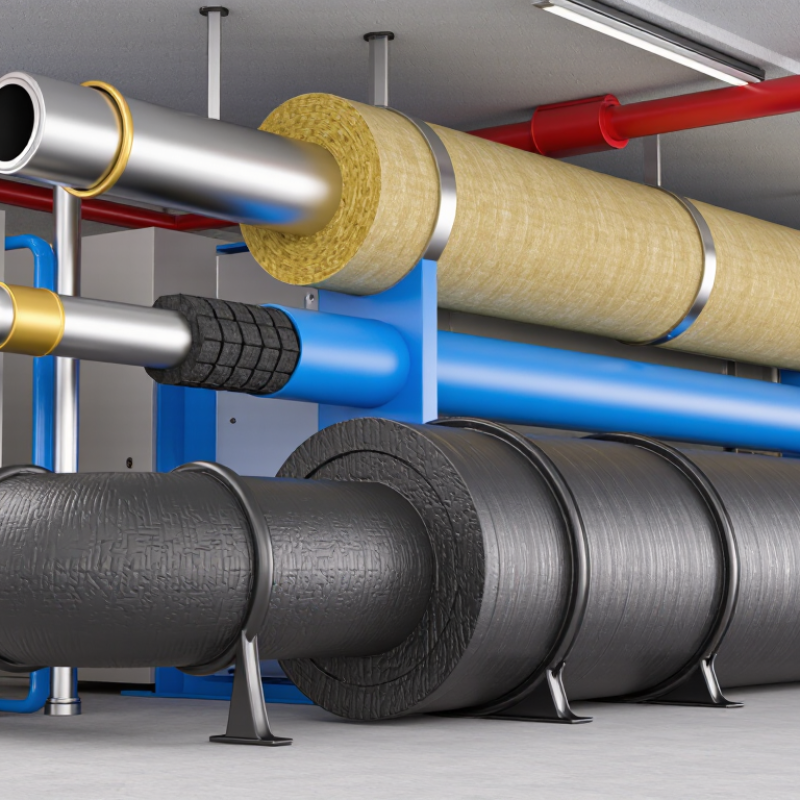
How to Choose HVAC Pipe Insulation in 2026?

HVAC Pipe Insulation: Purpose, Functions, and Key Performance Factors

How to Choose HVAC Pipe Insulation in 2026?

HVAC pipe insulation limits heat transfer, condensation, and energy waste. It keeps chilled-water pipes cold and heating lines warm. Without insulation, moisture can form on ceilings, valves, and nearby electrical surfaces. That damage often begins as a small, unnoticed drip. Good insulation also reduces temperature swings across long pipe runs. It can make pumps and control systems work more efficiently.

Material selection depends on service temperature, humidity, location, and mechanical exposure. Closed-cell insulation helps resist water vapor, but sealed joints matter just as much. In plant rooms, durable coverings can protect against impact and cleaning chemicals. Outdoor systems need weather-resistant jackets and secure seams. Fire performance must match local building requirements. A qualified engineer should verify thickness, vapor barriers, and clearance around fittings.

Look beyond thermal conductivity. Check operating temperature limits, water-vapor resistance, compressive strength, acoustic behavior, and installation quality.

Thin insulation may appear economical, yet it can increase condensation risk. Excessively thick insulation can create access problems around valves. I have seen excellent materials fail because installers left gaps at supports. Small details matter. Inspect every joint, hanger, elbow, and termination before closing ceilings. Digital sensors may support maintenance in 2026, but they cannot repair poor installation. A perfect specification is still incomplete without field verification.

How to Identify HVAC Pipe Types and Insulation Requirements

How to Choose HVAC Pipe Insulation in 2026?

Identifying the pipe comes before selecting insulation. Check drawings, service labels, pipe material, diameter, and connection points. A blue-marked line may carry chilled water, but faded labels can mislead. Field conditions are rarely perfect.

Chilled-water pipes need insulation with a continuous vapor barrier. Warm, humid air can condense on a cold pipe and damage nearby surfaces. Closed-cell materials are often suitable when their temperature range and fire rating match the project requirements. Hot-water pipes require insulation that limits heat loss and tolerates operating temperatures. The outer surface should remain safe to touch in accessible areas.

Refrigerant lines need careful separation between suction and liquid lines. The suction line usually needs thicker insulation to prevent condensation and protect system efficiency. Insulation joints must stay sealed around fittings, supports, and valves. Small gaps matter. Condensate drain pipes may also need insulation in humid spaces, especially when surface sweating is possible. Steam and high-temperature lines demand products tested for severe heat, with suitable clearances from combustible materials. In practice, installers should measure actual pipe temperatures and confirm design conditions, rather than relying only on color codes. Local energy, fire, and mechanical requirements still control the final choice. Mistakes happen when insulation thickness is selected from pipe size alone. Exposure to sunlight, moisture, chemicals, vibration, and maintenance access also deserves inspection.

How to Compare Insulation Materials for Temperature and Moisture Control

Choosing HVAC pipe insulation in 2026 requires more than comparing thickness or purchase price. Temperature control and moisture resistance should guide the decision. A suitable material keeps chilled water cold and limits condensation on the pipe surface. It also reduces unwanted heat gain in warm mechanical rooms. Measure the operating temperature, pipe diameter, ambient humidity, and available space before selecting insulation.

Closed-cell elastomeric rubber and polyethylene resist water vapor effectively when their joints are sealed correctly. They suit many chilled-water and refrigerant applications.

Fiberglass can perform well at higher temperatures, but its outer jacket must remain intact. A small tear can absorb moisture and reduce thermal performance. Phenolic foam offers strong thermal resistance, though it may require careful handling and compatible fittings.

Look closely at installation details. Press insulation firmly around elbows, valves, and pipe supports. Seal every cut, not only the long seams. Field inspections often find gaps behind clamps, where condensation begins quietly. Local fire, mechanical, and energy codes still control the final choice. Manufacturer test data should support the stated temperature range and water-vapor performance. I have seen projects overvalue low initial cost and overlook labor quality. That decision can create wet ceilings, corrosion, and repeated repairs. The better comparison includes service life, access conditions, and the installer’s actual skill.

How to Select Insulation Thickness, R-Value, and Installation Features

How to Choose HVAC Pipe Insulation in 2026?

Selecting insulation thickness starts with operating temperature, pipe size, and location. Hot-water pipes need protection from heat loss. Chilled-water lines need protection from condensation. The 2024 International Energy Conservation Code commonly specifies an R-value of 3.5 for domestic hot-water piping. However, commercial HVAC systems often require thicker insulation under ASHRAE 90.1-2022 tables. Always check the adopted local code.

R-value alone can mislead.

A higher number does not solve every installation problem. On a 45°F chilled-water pipe, a small vapor-seal gap may create dripping water within hours. The U.S. Department of Energy identifies HVAC distribution losses as a major source of building energy waste, although exact savings vary with climate, controls, and maintenance. Measure the actual pipe surface temperature, then select thickness from the manufacturer’s tested conductivity data.

Details matter. Use closed-cell insulation where moisture control is critical. Seal every longitudinal joint and valve connection. Protect outdoor sections from ultraviolet exposure, rain, and mechanical impact.

Keep insulation continuous through hangers, supports, and fittings. One overlooked clamp can become a cold bridge. I would also inspect seams after the first cooling season, because an installation that looks perfect may still fail under humid conditions.

References: ASHRAE 90.1-2022, 2024 IECC, and U.S. Department of Energy building-energy guidance.

How to Verify Safety, Durability, Compliance, and Long-Term Cost Value

How to Choose HVAC Pipe Insulation in 2026?

Safety and compliance should guide every insulation decision. The IEA’s Buildings 2023 report estimates that buildings consume about 30% of global final energy. Poorly insulated pipes increase heat loss, surface condensation, and equipment workload. Check the insulation’s thermal conductivity at the actual operating temperature, not only its catalogue value. Verify fire, smoke, and water-vapor performance through documented tests, such as ASTM E84, ASTM C1136, or equivalent regional standards. Local mechanical and fire codes still control the final approval.

Durability requires more than a thick wall. Inspectors should check compression resistance, joint sealing, ultraviolet exposure, moisture absorption, and chemical compatibility. ASHRAE Standard 90.1-2022 provides minimum insulation requirements for many HVAC and service-water applications. However, those values are compliance floors, not automatic cost targets. A damaged vapor barrier can ruin excellent insulation. A small gap matters.

Long-term value should include installation labor, maintenance access, replacement risk, and energy prices. The U.S. Department of Energy’s insulation guidance emphasizes that performance depends on material quality, thickness, and correct installation. Compare expected heat-loss reduction with the project’s operating hours. Record measurements before closing ceilings or shafts. No checklist is perfect. Field conditions change, and installers sometimes cut around valves too aggressively. A practical review should therefore combine laboratory certificates, code checks, site photographs, and a five-year maintenance estimate.

How to Choose HVAC Pipe Insulation in 2026?

Typical Thermal Conductivity at 24°C — Lower Values Improve Energy Efficiency

The chart uses representative thermal-conductivity values commonly published for HVAC pipe insulation materials at approximately 24°C. Lower conductivity generally means better heat-flow control and potentially lower operating costs. Final selection should also verify fire classification, smoke performance, moisture resistance, service-temperature limits, applicable local codes, and documented aging durability.

Values are typical reference figures rather than product certifications. Always confirm the exact assembly, thickness, test standard, and compliance documentation before installation.

FAQS

How can I identify an HVAC pipe before choosing insulation?

Check drawings, service labels, pipe material, diameter, and connection points. Measure actual pipe temperature when possible. Color codes can help, but faded labels may mislead.

Why do chilled-water pipes need a continuous vapor barrier?

Warm, humid air can condense on cold pipes. Moisture may damage ceilings, insulation, and nearby surfaces. Seal every joint and cut carefully.

Which insulation materials suit chilled-water and refrigerant lines?

Closed-cell rubber and polyethylene resist water vapor effectively. They work well when seams remain sealed. Their temperature range and fire rating must fit the project.

Why does a refrigerant suction line usually need thicker insulation?

The suction line operates at a low temperature. Thicker insulation helps prevent condensation and unwanted heat gain. Keep suction and liquid lines separated.

What installation areas commonly cause insulation problems?

Inspect elbows, valves, supports, clamps, and fittings. Small gaps matter. Condensation often begins behind poorly sealed clamps.

How should hot-water and high-temperature pipes be insulated?

Select insulation tested for the operating temperature. It should reduce heat loss and tolerate continued exposure. Accessible surfaces should remain safe to touch.

When might condensate drain pipes need insulation?

Humid spaces may cause surface sweating on condensate drains. Insulation can limit dripping and nearby moisture damage. Actual conditions deserve inspection.

What other factors affect insulation selection?

Consider humidity, sunlight, chemicals, vibration, maintenance access, and available space. Fiberglass needs an intact outer jacket. A small tear can absorb moisture.

Is the cheapest insulation option usually the best choice?

Not always. Low purchase cost may hide poor installation and short service life. Wet ceilings and repeated repairs cost more later. I may still underestimate field conditions.

Conclusion

Choosing Hvac Pipe Insulation in 2026 requires a practical understanding of the system’s purpose, operating conditions, and long-term performance needs. Proper insulation helps control heat loss and gain, prevent condensation, improve energy efficiency, reduce noise, and protect pipes from temperature-related damage. Start by identifying the pipe type, fluid temperature, location, humidity, and exposure conditions. These factors determine the appropriate insulation material and installation approach.

When comparing materials, consider thermal resistance, moisture control, flexibility, fire performance, durability, and compatibility with the pipe surface. Select a suitable thickness and R-value based on temperature requirements, energy goals, and applicable building standards. Installation features such as sealed joints, vapor barriers, weather protection, and secure fittings are equally important. Finally, verify product safety, code compliance, service life, maintenance needs, and total cost over time. The best solution balances reliable performance, straightforward installation, and long-term value rather than focusing only on initial purchase price.

Charlotte

Charlotte

Charlotte is a seasoned marketing professional with a deep understanding of the company's portfolio and a passion for elevating its presence in the market. With a keen eye for detail and a commitment to excellence, she ensures that our professional blog is regularly updated with insightful articles......