Choosing Pipe Tape Insulation for global projects requires more than comparing prices and roll lengths. Pipe systems lose energy through exposed surfaces, joints, valves, and poorly sealed overlaps. The United Nations Environment Programme’s 2023 Global Status Report for Buildings and Construction states that buildings consume about 30% of global final energy and produce approximately 26% of energy-related emissions. These figures show why small insulation decisions deserve serious technical attention.
A suitable tape must match the pipe material, operating temperature, humidity, and installation environment. Check thermal conductivity, thickness, adhesive strength, vapor resistance, and flame performance. Also review compatibility with copper, steel, PVC, and coated surfaces. In a refrigerated warehouse, for example, an open seam can collect condensation beneath the tape. That hidden moisture may damage insulation and accelerate corrosion. A warm rooftop installation creates different risks, including ultraviolet exposure and adhesive softening.
Details matter.
International buyers should request current technical data sheets, safety information, batch records, and independent test results. Relevant references may include ISO 12241 for thermal insulation calculations, EN 14304 for flexible elastomeric insulation products, and applicable ASTM testing methods. However, standards do not remove every purchasing risk. Test conditions may differ from real installations, and supplier claims can be incomplete. I have found that a tape performing well in a dry factory may fail during humid, long-distance projects. Therefore, buyers should test samples on the actual pipe surface before approving large orders. No universal tape exists. The best choice balances performance, climate, installation skill, transport conditions, and verified documentation.
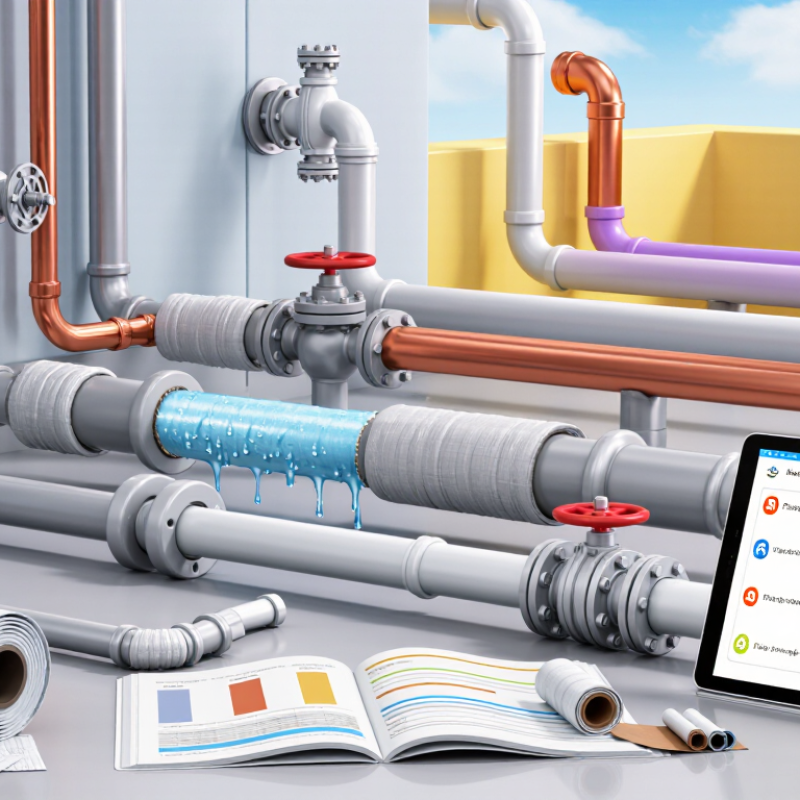
Choosing pipe tape insulation starts with identifying the pipe’s real working conditions. Cold-water pipes need moisture control, while hot-water lines need heat resistance. Outdoor pipes also face sunlight, rain, and temperature changes. Measure twice. Cut once.
Self-fusing silicone tape creates a tight, flexible seal around joints and irregular surfaces. It suits emergency repairs and moisture protection, but it is not thick thermal insulation. PVC tape offers electrical and surface protection, yet it can soften under high heat. Foil-faced tape reflects radiant heat and blocks vapor when seams are pressed firmly. Fiberglass tape tolerates higher temperatures, although it may require an additional sealing layer. Elastomeric insulation tape provides flexibility and helps reduce condensation on chilled pipes.
In field inspections, poor surface preparation causes many failures. Dust, oil, and dampness can prevent strong adhesion. Clean and dry the pipe before wrapping. Overlap each turn evenly, without stretching materials beyond their recommended limits. Check temperature ratings, UV resistance, flame performance, and compatibility with the pipe surface. Buyers should also request test data and installation instructions, not only a product label. Local building and fire requirements may differ between countries. A tape that performs well in a dry warehouse may fail quickly beside a coastal pipeline. This detail is easy to underestimate. Even experienced installers sometimes choose convenience over long-term inspection access.
Understanding Pipe Tape Insulation Types and Their Core Functions
Lower thermal conductivity generally provides better insulation efficiency, while a higher maximum service temperature is more suitable for hot pipes and demanding industrial environments. Values shown are representative figures for commonly used pipe-insulation materials; actual performance depends on density, thickness, moisture exposure, installation quality, and the specific product design.
How to Choose Pipe Tape Insulation for Global Buyers?
Choosing pipe tape insulation starts with operating temperature, not tape width. Record normal and peak temperatures before selecting a material. Measure the pipe surface, not only the surrounding air. A tape rated for chilled lines may soften on hot pipes. Heat can also weaken adhesive bonds. Check the substrate condition, including dust, rust, oil, and old coatings. Clean contact surfaces carefully. Small preparation errors often create large failures.
Moisture control deserves equal attention. On chilled pipes, warm humid air can reach cold surfaces through tiny gaps. Choose insulation with low water absorption and a continuous vapor barrier. Seal overlaps, edges, and fittings without leaving exposed seams. In wet rooms, test adhesive performance after condensation appears. Coastal projects need extra care because salt-laden air can attack exposed metal. Insulation alone cannot prevent corrosion when water remains trapped underneath.
Environmental exposure changes the selection. Outdoor pipe tape may need resistance to ultraviolet light, rain, abrasion, and seasonal movement. Industrial areas may add chemical vapors or cleaning agents. Request technical data, service-temperature limits, aging results, and compatibility information. A small site trial is worthwhile. Apply a short section, then inspect it after temperature cycling. Lab ratings help, but they do not copy every installation. I have seen good materials fail because the surface was damp. That mistake is easy to repeat. Recheck the assumptions before approving a large shipment.
The following comparison summarizes common pipe insulation tape and wrap solutions. Actual performance depends on tape construction, adhesive system, installation quality, pipe surface, and local climate.
| Insulation Tape / Wrap Type | Typical Service Temperature | Moisture and Vapor Performance | Thermal Conductivity (Approx. at 24°C) |
UV and Weather Resistance | Typical Applications | Key Selection Considerations |
|---|---|---|---|---|---|---|
| Closed-cell elastomeric foam tape | Approximately −40°C to +105°C; some formulations reach about +150°C for short-term exposure | Very low water absorption; closed-cell structure provides good resistance to water vapor when seams are properly sealed | About 0.034–0.040 W/m·K | Moderate to good; outdoor use generally requires a UV-resistant facing, coating, or protective jacket | Cold-water lines, chilled-water pipes, HVAC, refrigeration, condensation control, and moderate-temperature hot-water lines | Choose when condensation prevention and flexibility are more important than very high-temperature capability |
| Polyethylene foam tape | Approximately −40°C to +80°C; temperature limits vary significantly by adhesive and backing construction | Closed-cell structure offers low water absorption and useful vapor resistance; joints and overlaps must be sealed | About 0.035–0.045 W/m·K | Limited without UV stabilization or external protection; prolonged sunlight can degrade the foam | Domestic water pipes, low-temperature HVAC lines, light-duty pipe wrapping, and general-purpose thermal separation | A practical option for moderate climates and temperatures; verify adhesive performance before use on warm or wet surfaces |
| Mineral wool pipe wrap with foil or reinforced facing | Commonly suitable for continuous service around 250°C to 650°C, depending on product density and facing | Fibrous insulation can absorb moisture if exposed; a continuous vapor barrier and weatherproof jacket are important | About 0.035–0.045 W/m·K at moderate mean temperatures | Good temperature stability; foil or metal jacketing is needed for long-term outdoor weather protection | Steam lines, high-temperature process pipes, boilers, industrial heating systems, and fire-resistant installations | Best for high-temperature service; protect from rain and avoid compressing the insulation during installation |
| Fiberglass pipe wrap with vapor-barrier facing | Approximately −40°C to +450°C, depending on binder, facing, and installation method | Fiber itself is moisture-sensitive; foil-scrim-kraft or another sealed facing is required for cold-service vapor control | About 0.032–0.045 W/m·K | Facing provides limited weather protection; outdoor installations normally require a durable jacket | Hot-water pipes, heating systems, HVAC duct and pipe systems, and industrial services requiring non-combustible insulation | Use where a balance of thermal efficiency, temperature resistance, and non-combustibility is required |
| Foil-faced multilayer reflective wrap | Commonly about −40°C to +80°C; the adhesive and inner layers determine the actual limit | Foil can provide an effective vapor barrier when seams and penetrations are fully sealed; performance is reduced by punctures | Not directly comparable to bulk insulation; reflective performance requires an adjacent air space | Good resistance to sunlight when the foil remains intact; exposed edges and joints need protection | Supplementary insulation, ductwork, moderate-temperature pipes, retrofit applications, and areas with limited installation space | Do not rely on reflective properties alone where there is no air gap; combine with suitable bulk insulation for demanding conditions |
| Self-fusing silicone tape used over insulation | Often approximately −60°C to +200°C; exact limits depend on tape grade and exposure duration | Excellent sealing capability after fusion; helps protect insulation joints from water when correctly applied | Designed mainly as a sealing and protective layer, not as the primary thermal insulation | Generally very good resistance to UV, ozone, rain, and many outdoor conditions | Sealing overlaps, protecting insulation joints, emergency repairs, outdoor pipe connections, and irregular fittings | Select for weatherproofing and joint protection; use a separate insulation layer when significant heat transfer reduction is required |
Note: Temperature ranges and thermal conductivity values are typical industry ranges for material categories, not guaranteed product specifications. Buyers should request tested values under the intended standard, temperature, humidity, and installation conditions.
How to Choose Pipe Tape Insulation for Global Buyers?
Comparing Materials, Thicknesses, Sizes, and Performance Ratings
Choosing pipe tape insulation starts with the pipe’s environment, not the lowest price. Elastomeric rubber resists moisture well and suits chilled-water lines. Polyethylene foam is lighter and often easier to cut around bends. Fiberglass tape handles higher temperatures, but it may need an additional vapor barrier. Material selection matters.
Thickness controls heat flow and surface temperature. A 3 mm tape may suit mild indoor conditions, while 6 mm or more can better protect cold pipes in humid spaces. Thicker is not automatically better. It can create gaps around valves and make installation difficult. Measure the pipe outside diameter before selecting tape width. Overlapping each turn by roughly half its width can improve coverage.
Compare published thermal conductivity, operating-temperature range, water-vapor resistance, tensile strength, and adhesion. A low conductivity value usually indicates better insulation, but test methods can differ between suppliers. Check the stated flame rating and local building requirements for the destination market. A tape that performs well in a dry warehouse may fail on a vibrating outdoor line. Dirt, stretched tape, and poorly sealed joints reduce real performance. This is where product sheets can mislead if installation conditions are ignored. Inspect sample rolls for even thickness, clean adhesive, and flexible edges before placing a large order. Small details matter.
Global buyers should treat standards as a project requirement, not a marketing detail. Pipe tape insulation may need fire, smoke, thermal, moisture, and chemical-resistance testing. Requirements differ between countries and even between building types. A certificate alone is not enough. Check the test method, product thickness, operating temperature, and certificate scope. Documents should identify the exact material and production batch. A general factory quality certificate cannot replace product-specific evidence.
Installation conditions also shape the correct choice. Outdoor pipes may need UV resistance and a weatherproof outer layer. Cold-water lines require strong vapor resistance to reduce condensation under humid conditions. In plant rooms, installers may need low-smoke materials and clear handling instructions. Measure pipe diameter, bends, valves, and joint spacing before ordering. Adhesive performance can change on dusty, oily, or wet surfaces. Clean and dry the pipe first. Small gaps matter.
I have seen projects lose time because buyers checked compliance but ignored installation temperature. Some tapes will not bond well in cold conditions. That assumption fails. Ask for storage limits, surface preparation steps, and recommended overlap. Confirm whether gloves, eye protection, or ventilation are required during cutting and application. It is also wise to request samples before placing a large order. A tape can pass laboratory testing yet feel difficult around elbows. Field practicality still deserves attention.
How to Choose Pipe Tape Insulation for Global Buyers?
Evaluating Suppliers, Costs, Packaging, and International Shipping Terms
For global buyers, pipe tape insulation should be assessed beyond thickness and price. In purchasing projects, I compare supplier records, production controls, and test evidence before requesting a quotation. Ask for sample rolls from the same production line. Check adhesion, flexibility, insulation thickness, and performance after heat and moisture exposure. A polished certificate is not enough. Confirm its issuing laboratory, test method, and date. Also review the supplier’s response speed and ability to replace defective goods. Small communication gaps become expensive across borders.
Cost analysis should include landed cost, not only the unit price. Request pricing by roll, carton, pallet, and container quantity. Include tooling, sampling, inspection, insurance, customs charges, and local delivery. A low-price tape may use thinner backing or uneven adhesive, creating rework on site. That risk is easy to underestimate. Compare at least three written quotations with identical specifications. I have seen spreadsheets look efficient while ignoring damaged cartons and installation delays. That is a useful warning, not a perfect formula.
Packaging deserves a physical review. Rolls should be sealed against moisture, separated with protective film, and packed in strong cartons with batch labels. For humid routes, add pallet wrapping and corner protection. Confirm carton dimensions and gross weight before booking space. Shipping terms must be explicit. Under FOB, the buyer usually manages main ocean freight; under CIF, the seller arranges freight and basic insurance to the named port. State the exact Incoterm, named place, delivery window, documents, and claims process in the contract. Ask for photos before dispatch. Do not rely on promises alone.
Check fire, smoke, thermal, moisture, and chemical-resistance requirements. Standards vary by country and building type. Review the test method, thickness, temperature range, and certificate scope.
No. Request product-specific evidence. Documents should identify the exact material and production batch. A certificate may look reassuring, yet cover another thickness.
Measure pipe diameter, bends, valves, and joint spacing. Include difficult areas around elbows. Small gaps matter. A simple sketch can prevent expensive rework.
Clean and dry the pipe completely. Remove dust, oil, and moisture. Adhesive performance can change on dirty surfaces. That assumption often fails.
Cold temperatures may weaken bonding. Outdoor pipes may need UV resistance and weatherproof protection. Cold-water lines require strong vapor resistance against condensation.
Ask for samples from the same production line. Check adhesion, flexibility, thickness, and performance after heat and moisture exposure. Confirm the laboratory, test method, and certificate date.
Compare landed cost, not only the roll price. Include sampling, inspection, insurance, customs charges, local delivery, and possible installation delays. A low price can hide uneven adhesive.
Rolls should be moisture-sealed and separated with protective film. Use strong cartons, batch labels, pallet wrapping, and corner protection for humid routes. Request dispatch photos.
State the exact Incoterm, named place, delivery window, required documents, and claims process. Confirm carton dimensions and gross weight before booking space. Promises alone are not enough.
Choosing the right Pipe Tape Insulation requires a clear understanding of the application, environment, and long-term performance goals. Buyers should first compare insulation types and identify the tape’s core functions, such as reducing heat loss, protecting against condensation, supporting temperature control, or improving surface safety. Temperature range, moisture exposure, outdoor conditions, chemical contact, and installation location all influence the best choice. Material composition, thickness, width, flexibility, adhesion, durability, and performance ratings should be evaluated together rather than separately.
For international purchasing, buyers should also verify relevant safety certifications, testing documentation, and installation requirements for their target markets. A reliable supplier should provide consistent product specifications, quality control information, practical packaging, and clear guidance for storage and application. Total cost should include product pricing, labor, transportation, customs-related charges, and possible replacement expenses. Finally, reviewing minimum order quantities, lead times, shipping terms, and communication quality can help global buyers reduce supply risks and select a Pipe Tape Insulation solution that is efficient, compliant, and suitable for long-term use.

Kingflex