How to Choose the Right Insulation Jacketing?

Time:2026-09-21 Author:Madeline
0%

Choosing the right Insulation Jacketing is not a cosmetic decision. It affects thermal performance, moisture control, durability, maintenance, and workplace safety. A jacket may look polished yet fail at a valve, seam, or outdoor joint. Small details matter.

The International Energy Agency reports that buildings and construction represent about 30% of global energy demand. Its Global Status Report for Buildings and Construction also links the sector to roughly 26% of global energy-related emissions. These figures explain why insulation systems deserve careful specification. The U.S. Department of Energy further identifies insulation as a practical method for reducing industrial heat loss and improving energy efficiency. However, the jacket protects that investment only when it suits the environment.

A reliable selection process considers temperature, humidity, ultraviolet exposure, chemical contact, impact risk, fire performance, and cleaning requirements. ASHRAE guidance emphasizes that insulation systems must address condensation control, surface conditions, and service access. In real facilities, installers often see failures around penetrations and poorly sealed longitudinal joints. Those weak points can allow water behind the insulation, causing corrosion under insulation and expensive repairs. No material is perfect. Metal jacketing offers strong mechanical protection, while flexible polymer options can simplify installation in demanding shapes. The correct choice depends on the entire system, not one impressive specification. This guide compares common materials, applications, and practical trade-offs, while acknowledging an uncomfortable truth: even a well-designed jacket can underperform when installation quality is overlooked.
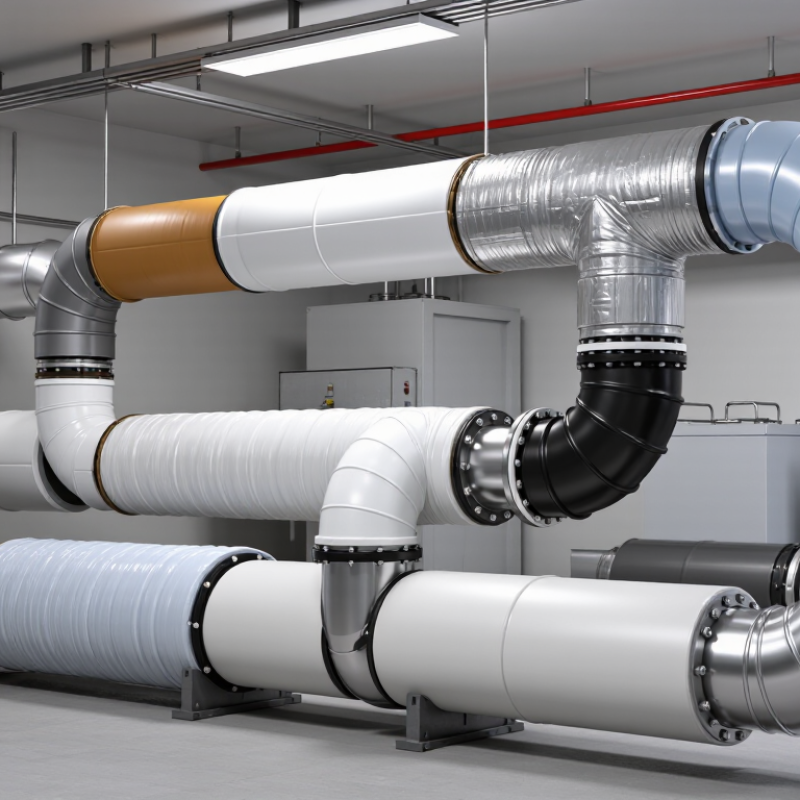
How to Choose the Right Insulation Jacketing?

What Insulation Jacketing Is and Why It Matters

Insulation jacketing is the outer skin placed over thermal insulation. It protects insulation from rain, sunlight, impact, chemicals, and moisture movement. Without it, wet fibers or damaged foam can lose performance quickly. A neat jacket can still hide a failed vapor seal.

The U.S. Department of Energy reports that properly insulated hot surfaces may reduce heat loss by up to 90% compared with bare surfaces. That figure explains why jacketing matters, not just how it looks. On a chilled pipe, sealed joints help prevent condensation. On a hot line, tight overlaps reduce water entry and surface damage.

Aluminum suits many outdoor systems, while stainless steel may perform better in harsh or corrosive areas. Plastic jacketing can be useful indoors, but temperature limits require careful checking.

IEA’s Energy Efficiency 2023 report states that buildings consume about 30% of global final energy. Industrial facilities add further pressure to control wasted heat. During site inspections, I look for lifted seams, loose bands, punctures, and damp insulation near supports. Small defects often grow after repeated rain and thermal expansion. Standards such as ASTM C1423 and ASTM C1767 can support material selection and installation decisions. They do not replace field judgment. No jacket is perfect. A stronger material may cost more, reflect heat differently, or complicate repairs. The right choice depends on temperature, weather, maintenance access, fire requirements, and the consequences of moisture intrusion.

How to Assess Temperature, Moisture, and Environmental Conditions

Choosing insulation jacketing starts with the conditions around the pipe, vessel, or duct. In field inspections, I check operating temperature, surface temperature, and temperature swings before reviewing product data. Jacketing must tolerate the hottest expected point, not only the normal reading. A surface near 90°C can behave differently during shutdowns, washdowns, or steam exposure. Record minimum and maximum temperatures over several cycles. Short-term readings can mislead.

Moisture deserves equal attention. Outdoor systems face rain, condensation, ultraviolet exposure, and freeze-thaw movement. Indoor systems may still meet wash water, cleaning chemicals, or humid air. Look for sealed laps, protected penetrations, and drainage paths. Water trapped beneath jacketing can corrode metal quietly. It can also reduce insulation performance. Do not rely on a neat appearance. I once saw a clean installation fail because an unsealed joint sat below a valve. That detail was easy to miss.

Assess impact, wind, foot traffic, animals, and maintenance access. A thin jacket may suit a sheltered ceiling but fail beside a loading area. Consider chemical vapors, salt air, and dust before selecting the jacket material. Confirm fire behavior, durability, and installation limits with reliable technical documentation. Ask whether crews can repair it without damaging adjacent sections. The first choice is not always perfect. Recheck assumptions after installation, especially where moisture patterns change with seasons.

How to Choose the Right Insulation Jacketing? — Assessing Temperature, Moisture, and Environmental Conditions
Jacketing Type Typical Service Temperature Guidance Moisture and Vapor Control UV and Weather Resistance Chemical and Corrosion Resistance Impact and Mechanical Protection Best-Fit Applications Selection Considerations
Aluminum Sheet or Aluminum Stucco Embossed Jacketing Typically suitable for approximately −40°C to 300°C, depending on alloy, finish, joints, and the insulation system. Excellent
Provides an effective weather barrier when seams, penetrations, and end joints are properly sealed. Use a vapor-stop design for below-ambient systems.
Excellent
Performs well outdoors and reflects solar radiation, although surface temperature can still rise significantly in direct sun.
Good
Resists atmospheric exposure but may be vulnerable to galvanic corrosion when in contact with incompatible metals or persistent moisture.
Good
Rigid and durable, but can dent under severe impact.
Outdoor pipework, tanks, ducts, chilled-water lines, steam lines, and general industrial insulation. Use compatible fasteners and isolators. Avoid water traps and seal all laps. Consider a protective coating in aggressive coastal or chemical environments.
Stainless Steel Jacketing Commonly selected for approximately −40°C to 500°C or higher, subject to grade, thickness, insulation, and joint design. Excellent
Forms a strong weather barrier and is appropriate where frequent washdown or high humidity is expected.
Excellent
Suitable for prolonged outdoor exposure, including demanding industrial environments.
Excellent
Strong resistance to many corrosive atmospheres; the exact stainless grade must match chlorides, acids, and process contaminants.
Excellent
High strength and strong resistance to denting, abrasion, and repeated cleaning.
Food and pharmaceutical areas, coastal facilities, chemical plants, high-temperature equipment, and washdown zones. Higher material cost is justified when hygiene, corrosion resistance, or mechanical durability is critical. Prevent crevices where corrosive liquids can collect.
PVC Jacketing Typically used from approximately 0°C to 65°C; some formulations may allow higher temperatures, but the product rating must be verified. Good
Resists liquid water when joints are sealed, but is not inherently a complete vapor barrier unless the system is specifically designed and sealed for that purpose.
Moderate
Suitable for many indoor and sheltered outdoor applications. Long-term UV exposure can cause discoloration, embrittlement, or loss of flexibility unless UV-stabilized.
Good
Resists moisture and many common chemicals, but compatibility must be checked for solvents, oils, and elevated temperatures.
Moderate
Lightweight and easy to clean, but can crack or deform under severe impact or heat.
Indoor chilled-water piping, commercial HVAC systems, clean utility areas, and protected mechanical rooms. Do not use near hot surfaces or high-temperature piping unless the specific PVC system is rated for the service. Confirm smoke, flame, and local building-code requirements.
Reinforced Vapor Retarder Laminate Generally intended for ambient and moderate-temperature indoor systems; many products are limited to approximately 80°C, but the published product rating controls. Excellent
Designed to limit water vapor transmission when seams, staples, penetrations, and terminations are sealed correctly.
Limited
Many laminates are not intended for prolonged direct sunlight, rain, or severe weather unless specifically labeled for outdoor exposure.
Moderate
Performance depends on the facing film, foil, reinforcement, adhesive, and exposure to chemicals.
Limited
Can tear or puncture without an additional protective layer.
Indoor ductwork, cold piping, refrigerated systems, and insulation where vapor control is more important than impact protection. Use a weatherproof outer jacketing layer outdoors. Seal every joint and penetration to maintain the vapor-retarder function.
Fiber-Reinforced Plastic (FRP) Jacketing Commonly suitable for approximately −40°C to 120°C, depending on resin, laminate construction, and manufacturer rating. Excellent
Provides strong resistance to rain, humidity, and many wet-process conditions when joints are properly sealed.
Excellent
UV-stabilized grades can provide durable outdoor service; verify the resin and surface-finish specification.
Excellent
Often selected for corrosive atmospheres, but chemical compatibility must be checked against the specific resin system.
Good
Good resistance to corrosion and moderate impact; heavy impacts may crack or fracture the laminate.
Chemical facilities, wastewater plants, coastal structures, corrosive outdoor environments, and areas requiring low-maintenance weather protection. Check fire performance, smoke development, resin compatibility, support spacing, and local requirements. Repair damaged areas to prevent moisture entry.
Elastomeric or Flexible Protective Jacketing Often used from approximately −50°C to 105°C, depending on polymer type and system design. Good
Flexible and resistant to intermittent moisture; vapor-retarder performance depends on material permeability and sealed seams.
Good
Many elastomeric materials tolerate outdoor exposure, but UV stability varies by polymer and formulation.
Good
Generally resistant to moisture and selected chemicals; oils, fuels, solvents, and concentrated chemicals require specific compatibility checks.
Excellent
Flexible construction handles vibration, movement, and irregular shapes better than rigid sheet jacketing.
Valves, fittings, expansion joints, vibration-prone equipment, irregular geometries, and areas where movement is expected. Confirm resistance to compression, puncture, UV, fire, and the operating fluid. Ensure the flexible system does not create gaps at transitions.
Practical selection rule: First define the minimum and maximum operating temperature, then determine whether the system is above or below ambient temperature. Below-ambient insulation generally requires a continuous vapor retarder. For outdoor or wet locations, prioritize sealed joints, drainage, UV resistance, and corrosion compatibility. The temperature ranges shown are typical guidance rather than universal limits; always verify the selected jacketing product, insulation material, joint sealant, fire classification, and applicable code requirements.

How to Compare Common Jacketing Materials and Their Properties

Choosing insulation jacketing requires more than comparing prices. The outer layer controls moisture, impact resistance, ultraviolet exposure, and service life. A damaged jacket can leave wet insulation behind a clean-looking surface. Moisture changes everything.

Aluminum remains practical for indoor and outdoor pipework. It is lightweight, reflective, and easy to form around elbows. ASHRAE Handbook—Fundamentals lists polished aluminum emissivity near 0.04–0.09, helping reduce radiant heat transfer. Weathered aluminum performs differently. Its surface becomes less reflective over time. ASTM C1729 also addresses aluminum jacketing dimensions, seams, and protective finishes.

Stainless steel suits aggressive environments, washdown areas, and locations with frequent mechanical contact. It costs more and requires careful isolation from dissimilar metals. PVC jacketing offers low initial cost and clean installation, but high temperatures and ultraviolet exposure can limit its use. Glass cloth with a weather-resistant coating works well around irregular equipment, although punctures may be difficult to notice. Details matter.

The U.S. Department of Energy’s Steam Tip Sheet 2 reports that proper insulation can reduce steam-line heat loss by up to 90%. That figure describes the complete insulation system, not the jacket alone. The jacket protects that investment. I would not select material from a catalog table only. Check operating temperature, rainfall, maintenance traffic, chemical exposure, and seam design at the actual site. A cheaper jacket may become the expensive option after one wet season.

How to Match Jacketing Design to Application and Installation Needs

How to Choose the Right Insulation Jacketing?

Jacketing design should follow the application, not appearance. A cold pipe in a humid plant needs a continuous vapor retarder. A hot line outdoors needs UV resistance, weather protection, and safe surface temperatures. The U.S. Department of Energy’s Industrial Decarbonization Roadmap identifies energy efficiency as a practical emissions-reduction measure. Poorly sealed jacketing can undermine that benefit. The IEA’s 2023 Global Status Report notes that buildings and construction used about 30% of global final energy. Small insulation failures can become expensive across large systems.

Installation conditions matter just as much. Choose smooth, washable surfaces for food or clean manufacturing areas. Use impact-resistant metal jacketing near walkways and maintenance zones. Allow removable sections around valves, flanges, and instruments. Overlapping seams should shed water, not collect it. On chilled systems, every penetration needs careful sealing. ASHRAE guidance emphasizes continuous vapor retarders on cold insulation. One open joint can create hidden condensation.

Tips: Check temperature, moisture, UV exposure, chemicals, and impact risks before selecting material. Confirm seam direction with the installer. Do not assume thicker insulation fixes poor detailing. I have seen attractive jackets fail around supports and elbows. Field access is often underestimated. Review a sample section before full installation, then inspect it after the first heavy rain or shutdown. A design that looks perfect on paper may still need adjustment onsite.

How to Choose the Right Insulation Jacketing?

Matching jacketing design to application and installation needs

The chart uses a comparative 1–5 suitability index based on commonly recognized material characteristics. Aluminum jacketing is well suited to outdoor moisture and UV exposure, stainless steel provides strong impact and corrosion resistance, PVC supports flexible indoor installations, and fabric jacketing is useful where flexibility and quick installation are priorities. Final selection should also consider temperature, fire requirements, chemical exposure, maintenance, and local standards.

How to Verify Durability, Safety, and Long-Term Performance

Choosing insulation jacketing requires more than checking appearance. Durability starts with the environment: temperature, moisture, sunlight, chemicals, and mechanical impact. The International Energy Agency reported in Energy Efficiency 2023 that buildings consume about 30% of global final energy. Poor jacketing can weaken insulation and increase heat loss. A clean surface is not proof of performance.

Verify the specification before installation. Request test reports for thermal resistance, water vapor transmission, flame spread, smoke development, and corrosion resistance. ASTM E84 data can help assess surface burning behavior. ASTM C1136 and ASTM C1729 may support evaluations for flexible and metal jacketing systems. The U.S. Department of Energy states that insulation improvements can reduce heating and cooling costs by 10% to 50%, depending on the building and existing conditions. That range is useful, but it is not a promise.

Tips: Inspect seams, fasteners, overlaps, and penetrations on site. Look for crushed sections, open joints, trapped water, and damaged vapor barriers. Record product thickness, lot details, test dates, and installation temperatures. Ask whether testing used the same thickness and exposure conditions. A certificate alone can mislead. Field workmanship often decides the result. I have seen technically strong systems fail because rain entered through one unsealed joint. Recheck vulnerable areas after the first seasonal temperature cycle. No system stays perfect.

FAQS

Why does insulation jacketing matter beyond appearance?

Jacketing controls moisture, impacts, sunlight, and service life. A clean surface can hide wet insulation underneath. Moisture changes everything.

When is aluminum jacketing a practical choice?

Aluminum works well on indoor and outdoor pipes. It is lightweight, reflective, and easy to shape around elbows. Weathering gradually reduces reflectivity.

When should stainless steel jacketing be considered?

Stainless steel suits washdown areas, aggressive environments, and locations with frequent mechanical contact. It costs more. Separate it carefully from dissimilar metals.

What limitations should be considered with PVC jacketing?

PVC usually has a low initial cost and installs cleanly. High temperatures and ultraviolet exposure may shorten its useful life. Check the actual site.

Where can coated glass cloth jacketing work well?

Coated glass cloth fits irregular equipment and complicated shapes. Its flexible surface helps around crowded areas. Small punctures may be difficult to notice.

How should jacketing be selected for cold pipes?

Cold pipes in humid areas need a continuous vapor retarder. Seal every penetration, joint, and support carefully. One open seam can create hidden condensation.

What installation details reduce water problems outdoors?

Overlapping seams should shed rain instead of collecting it. Use weather-resistant materials and inspect elbows, supports, and removable sections. Heavy rain exposes weak details.

How can maintenance needs influence jacketing design?

Provide removable sections around valves, flanges, and instruments. Use impact-resistant metal near walkways and service zones. Field access is often underestimated.

Conclusion

Choosing the right Insulation Jacketing is essential for protecting insulation systems, improving energy efficiency, and extending service life. A suitable jacket helps control heat transfer while shielding insulation from moisture, chemicals, physical damage, UV exposure, and changing environmental conditions. The selection process should begin by evaluating operating and surface temperatures, humidity, weather exposure, indoor or outdoor location, and the risk of condensation or corrosion. These factors determine the level of protection and material performance required.

Common jacketing materials differ in flexibility, impact resistance, fire performance, moisture resistance, and ease of installation. The best option should match the application, equipment shape, maintenance requirements, and available installation space. Design details such as seams, overlaps, fasteners, joints, and drainage paths are equally important because poor installation can reduce the effectiveness of even high-quality materials. Finally, assess durability, safety, cleanability, and expected service life to ensure reliable long-term performance. A well-chosen and properly installed Insulation Jacketing system protects the insulation, supports stable operation, and reduces future repair and replacement needs.

Madeline

Madeline

Madeline is a dedicated marketing professional with a wealth of expertise in our company's core offerings. With a keen understanding of the industry, she brings a unique perspective to her role, consistently delivering high-quality content that highlights the superior aspects of our products. As......