China Top 40mm Pipe Insulation Manufacturers?

Time:2026-10-21 Author:Henry
0%

Choosing among China’s top 40mm Pipe Insulation manufacturers requires more than comparing catalog prices. It demands practical checks on thermal performance, moisture resistance, dimensional accuracy, and production consistency. A pipe section may look uniform under showroom lighting, yet fail when exposed to condensation, vibration, or repeated temperature changes.

Building-science expert Dr. Joseph Lstiburek has repeatedly emphasized, “Water is the enemy.” That principle matters here. Effective 40mm Pipe Insulation should limit heat transfer while protecting chilled-water, HVAC, and industrial piping from surface condensation. This article introduces leading Chinese manufacturers through a buyer-focused lens, including material options, factory capabilities, quality systems, customization services, and export experience.

The strongest suppliers usually provide clear technical datasheets, test reports, sample approvals, and traceable production details. Some offer rubber foam, fiberglass, mineral wool, polyethylene, or specialized elastomeric products. Each material behaves differently. The right choice depends on temperature range, pipe diameter, fire requirements, indoor conditions, and installation methods.

Still, manufacturer rankings are not permanent. Marketing claims can be polished, while independent verification may be limited. That is worth acknowledging. A reliable evaluation should combine supplier interviews, sample testing, certification review, and feedback from completed projects. Buyers should also examine packaging quality, lead times, warranty terms, and after-sales communication.

This guide aims to make that process clearer. It highlights manufacturers that demonstrate measurable competence, not merely impressive websites. For engineers, contractors, and international distributors, the goal is practical: identify a dependable partner for long-term 40mm Pipe Insulation supply.
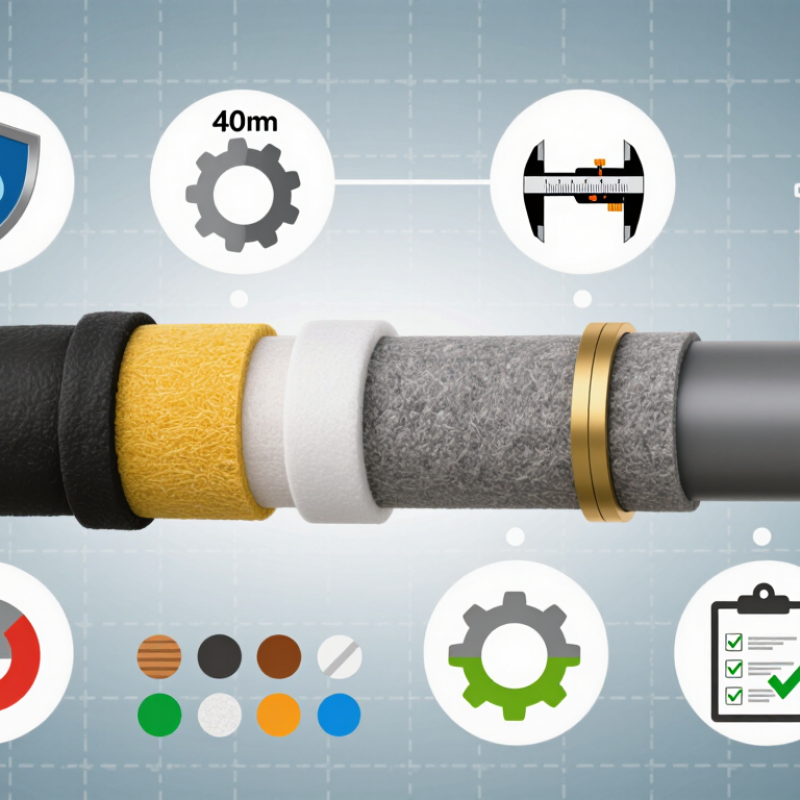
China Top 40mm Pipe Insulation Manufacturers?

What Is 40mm Pipe Insulation and Why Is It Used?

What Is 40mm Pipe Insulation and Why Is It Used?

40mm pipe insulation means a thermal insulation layer measuring 40 millimeters in thickness. It is installed around hot-water, steam, chilled-water, or process pipes. The layer usually contains mineral wool, elastomeric foam, fiberglass, or rigid polymer foam. Its purpose is practical: reduce heat transfer, prevent condensation, protect workers, and stabilize fluid temperatures.

The International Energy Agency’s Energy Efficiency 2023 report identifies efficiency improvements as a major source of global energy savings. Pipe insulation supports this goal by reducing avoidable thermal loss along long distribution routes. U.S. Department of Energy steam guidance also highlights insulation as a basic method for limiting heat loss from valves, flanges, and exposed piping. In a factory, an uninsulated hot pipe can feel painfully hot within seconds. A properly fitted 40mm layer feels noticeably cooler outside.

However, 40mm is not a universal answer. Engineers should calculate temperature, pipe diameter, operating hours, moisture exposure, and insulation conductivity. EN ISO 12241 provides methods for thermal calculations, while ASTM C335 evaluates heat flow through pipe insulation. Site experience shows that damaged joints often undermine good materials. That detail is easy to miss. A thicker layer may also create clearance problems around supports and valves. Careful installation matters as much as the specified thickness.

Key Standards for Evaluating Chinese Pipe Insulation Manufacturers

China Top 40mm Pipe Insulation Manufacturers: Key Standards for Evaluation

When evaluating Chinese manufacturers of 40mm pipe insulation, check more than catalog thickness. Confirm dimensional tolerance, thermal conductivity, water absorption, density, and fire performance. Requirements should match the pipe system, temperature range, and installation environment. Ask for current laboratory reports and production-batch records. Reports should identify test methods, sample conditions, and testing dates. Chinese GB standards may apply, while EN, ASTM, or ISO methods may support international projects. The correct standard depends on the application.

Factory capability matters as much as paperwork. Review raw material controls, curing or forming processes, cutting accuracy, and packaging protection. A reliable supplier should explain how 40mm thickness remains consistent across long production runs. Request samples from normal production, not specially prepared pieces. Compare measurements with the approved specification. In practice, a polished brochure proves little. Even a strong audit can miss weak batch traceability or poor storage control. That point deserves attention.

Tips: Ask for a small trial order before committing to volume. Measure thickness at several points and inspect surface damage after transport. Check whether certificates belong to the exact material grade and production site. Keep written records of tolerances, delivery conditions, and inspection results. No checklist is perfect. Reassess suppliers when materials, equipment, or standards change.

China Top 40mm Pipe Insulation Manufacturers? Key Standards for Evaluating Chinese Pipe Insulation Manufacturers

This screening framework uses practical procurement criteria for comparing 40 mm pipe insulation suppliers. The percentages are recommended evaluation weights, not company rankings or certified market-share data.

Prioritize verifiable test reports, thermal performance, dimensional consistency, moisture resistance, fire behavior, and production traceability when evaluating manufacturers.

Top 40mm Pipe Insulation Manufacturers in China

Top 40mm Pipe Insulation Manufacturers in China are evaluated by more than catalog thickness. Production experience matters when insulation serves chilled-water lines, steam pipes, or outdoor process systems. During supplier reviews, I check whether the stated 40mm thickness remains stable after cutting, wrapping, and transport. Small variations can create gaps around elbows and increase heat loss. That detail is easy to miss. Material selection also deserves attention. Mineral wool, glass wool, rubber foam, and polyethylene suit different temperature and moisture conditions. Reliable manufacturers explain these limits instead of presenting one material as universal.

A capable Chinese factory should provide documented density, thermal conductivity, water absorption, and fire-performance results. Ask for recent laboratory reports, batch records, and production samples. Factory audits should examine cutting accuracy, adhesive handling, packaging, and warehouse dryness. For export projects, confirm dimensional tolerances and test methods before approving technical documents. Certificates alone are not enough. Testing must match the application. Engineers should answer installation questions clearly, including valve sections, supports, vapor barriers, and joint sealing. Vague replies may signal weak technical control.

I have learned that a polished sample can hide inconsistent production. Request several pieces from different batches. Compare thickness, flexibility, surface finish, and recovery after compression. Photographs help, but hands-on inspection reveals more. One limitation remains: factory claims can change under project pressure. Independent inspection is worth considering for large orders. Even then, no process is perfect. Clear specifications and traceable records support a more reliable choice.

Product Types, Materials, and Customization Options

China Top 40mm Pipe Insulation Manufacturers?

A 40mm specification usually means insulation thickness, not pipe diameter. Confirm this detail before requesting quotations. Product choices include elastomeric rubber, fiberglass, mineral wool, PIR, and aerogel blankets. Elastomeric foam suits chilled-water lines because its closed cells resist moisture. Mineral wool performs well near high-temperature steam pipes. PIR offers low thermal conductivity, but its fire performance requires careful verification.

The International Energy Agency reports that buildings consume about 30% of global final energy. Industrial pipe insulation can reduce heat loss, though actual savings depend on temperature, weather, surface area, and installation quality. ISO 12241 provides calculation methods for thermal insulation in building equipment and industrial installations. Ask manufacturers for tested conductivity values, service-temperature ranges, fire classifications, and water-vapor resistance. Custom options may include metric or imperial inner diameters, factory-cut sections, aluminum jacketing, PVC covers, reinforced foil, color coding, and removable valve blankets. Specifications are often less clear than expected.

Tips: Measure the pipe outside diameter, not only the nominal size. Request samples for bends, flanges, and supports. Check whether 40mm remains continuous around joints. A thin gap can weaken performance. Review third-party test reports, batch records, and installation guidance before approval. Estimates from supplier calculators are useful, but they should not replace an engineer’s heat-loss assessment.

How to Select a Reliable Chinese Manufacturer for Your Project

Choosing a reliable Chinese manufacturer for 40mm pipe insulation requires more than comparing online prices. Start by defining the operating conditions. Confirm pipe diameter, insulation thickness, service temperature, moisture exposure, and installation environment. A 40mm layer may not suit every pipe system.

Request technical data before discussing large orders. Reliable manufacturers should provide thermal conductivity, density, water absorption, dimensional tolerance, and fire-performance results. Ask whether testing was completed by an independent laboratory. Check the report date, test method, and product description carefully. Old reports can create false confidence.

Ask for production samples with your required thickness and outer diameter. Measure them at several points. Small variations may affect joint sealing and heat loss. The surface should be even, without deep cracks, crushed edges, or unstable layers. It sounds basic. It is often missed.

Evaluate factory control, not only the sales response. Request photographs or a live video of raw-material storage, cutting equipment, packing, and final inspection. A dependable supplier should explain batch coding, inspection records, replacement terms, and delivery controls in clear language. Communication matters when specifications change.

For larger projects, use a staged order. Approve a sample, inspect the first production batch, then release the balance. This approach protects schedules and exposes weak controls early. I have seen attractive quotations become expensive after poor packaging caused damaged insulation. That risk deserves attention.

Do not accept vague claims such as “high quality” or “export standard.” Ask for measurable evidence and project references with similar temperatures and pipe sizes. Review every document with your engineer. Even experienced buyers can overlook compatibility between insulation, adhesive, jacketing, and site conditions. A careful decision is rarely the fastest one.

FAQS

What does 40mm pipe insulation mean?

It means the insulation layer is 40 millimeters thick around the pipe. It reduces heat transfer. It may contain mineral wool, fiberglass, elastomeric foam, or rigid polymer foam.

Why is 40mm pipe insulation used?

It helps maintain fluid temperatures during transport. It can reduce heat loss, condensation, and surface temperatures. Workers may face less contact risk near hot pipes.

Can 40mm insulation suit every pipe system?

No. Engineers should consider pipe diameter, fluid temperature, operating hours, moisture, and insulation conductivity. A thicker layer may block supports or valves.

Which materials are suitable for 40mm pipe insulation?

Mineral wool often suits high-temperature systems. Elastomeric foam can work well around chilled-water pipes. Fiberglass and polymer foam suit different environments. There is no universal material.

What technical data should buyers request?

Request thermal conductivity, density, water absorption, fire performance, and dimensional tolerance. Check the test date and method. Old reports can mislead.

How can buyers inspect production samples?

Measure thickness at several points. Check edges, flexibility, surface finish, and recovery after compression. Look for cracks or crushed sections. Hands-on inspection matters.

What should buyers check before choosing a Chinese manufacturer?

Review production records, storage conditions, cutting accuracy, packaging, and final inspection. Ask for samples from different batches. A polished sample proves little.

How can large insulation orders reduce quality risks?

Approve a sample before production. Inspect the first batch, then release the remaining order. Use clear replacement and delivery terms. This process takes longer. It may prevent costly damage.

Why do insulation joints require special attention?

Open joints create gaps and increase heat loss. Poor sealing can also allow moisture beneath the insulation. Good material cannot correct careless installation. That is easy to overlook.

Conclusion

This guide explains what 40mm Pipe Insulation is and why it is widely used in industrial, commercial, and building service systems. With a typical thickness of 40 millimeters, this insulation helps reduce heat loss, prevent condensation, improve energy efficiency, and protect pipes from temperature-related damage. The article also introduces key standards for evaluating Chinese manufacturers, including material quality, thermal performance, fire resistance, dimensional accuracy, production capacity, testing procedures, and quality management.

It presents a practical overview of leading types of Chinese manufacturers without focusing on specific brands, covering products made from rubber foam, fiberglass, mineral wool, polyethylene, and other insulation materials. Readers can also learn about customization options such as diameter, density, surface treatment, packaging, and project-specific performance requirements. Finally, the guide offers suggestions for selecting a reliable supplier by reviewing certifications, technical documentation, sample quality, delivery capability, communication, after-sales support, and overall value for long-term project cooperation.

Henry

Henry

Henry is a dedicated marketing professional with a profound expertise in the company's offerings. With years of experience in the industry, he possesses an impressive understanding of the market dynamics and consumer behaviors that drive success. Henry is committed to sharing his insights through......