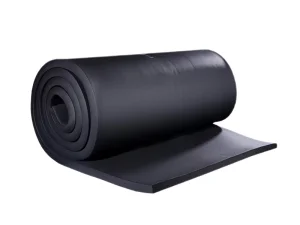
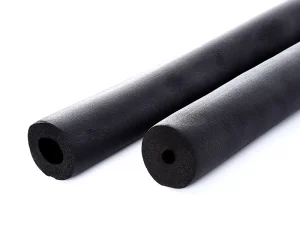
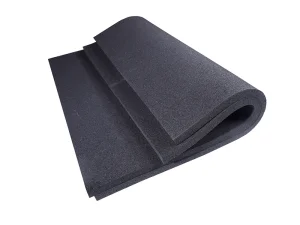
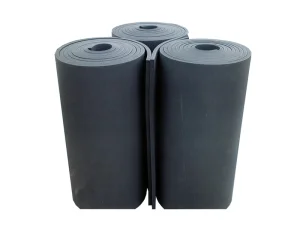
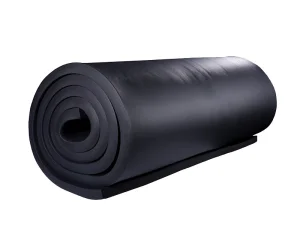
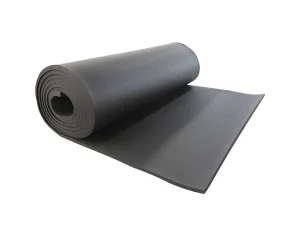
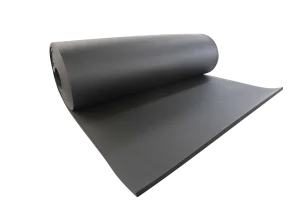
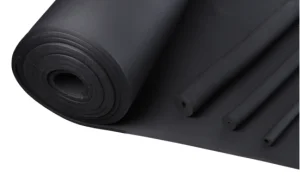
 Kingflex
1 / 1


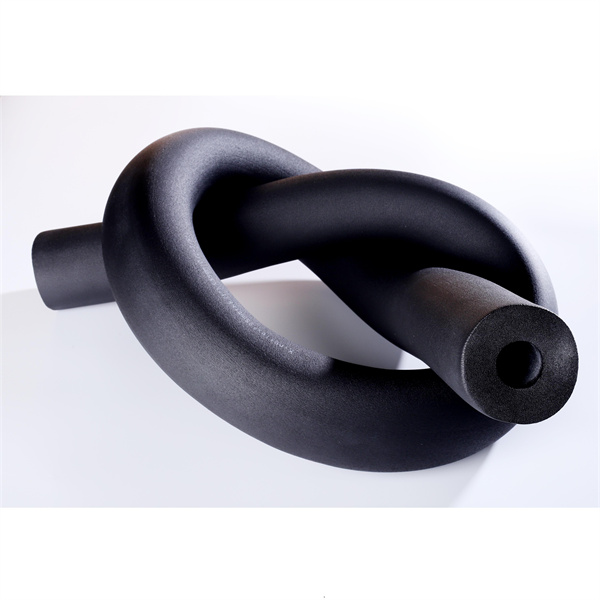
Used to retard heat transmission and control condensation from chilled-water and refrigeration systems. It also efficiently reduces heat transfer for hot-water plumbing and liquid-heating and dual-temperature piping.
It is ideal for applications in:

| Technical Data Sheet | |||
|---|---|---|---|
| Property | Unit | Value | Test Method |
| Temperature range | °C | -50 to 110 | GB/T 17794-1999 |
| Density range | Kg/m³ | 45-65 | ASTM D1667 |
| Water vapor permeability | Kg/(m.s.pa) | ≤ 0.91×10⁻¹³ | DIN 52 615 / BS 4370 Part 2 1973 |
| μ (Mu Factor) | - | ≥ 10000 | - |
| Thermal Conductivity | W/(m.k) | ≤ 0.030 (-20°C) | ASTM C 518 |
| ≤ 0.032 (0°C) | |||
| ≤ 0.036 (40°C) | |||
| Fire Rating | - | Class 0 & Class 1 | BS 476 Part 6 & Part 7 |
| Flame Spread and Smoke Developed Index | - | 25/50 | ASTM E 84 |
| Oxygen Index | - | ≥ 36 | GB/T 2406, ISO 4589 |
| Water Absorption, % by Volume | % | ≤ 2% | ASTM C 209 |
| Dimension Stability | % | ≤ 5 | ASTM C534 |
| Fungi resistance | - | Good | ASTM G21 |
| Ozone resistance | - | Good | GB/T 7762-1987 |
| Resistance to U.V. and weather | - | Good | ASTM G23 |



What are the primary benefits of using rubber foam insulation?
Rubber foam insulation offers a closed-cell structure, low heating conductivity, low water absorption rate, good fireproof/soundproof performance, and excellent aging resistance.
How does the closed-cell structure improve insulation performance?
The closed-cell structure forms a highly dense and independent barrier that effectively blocks moisture ingress and prevents heat transfer, resulting in long-term stable thermal efficiency.
What is the operating temperature range for this material?
This rubber foam insulation is rated for temperature applications ranging from -50°C up to 110°C, making it suitable for both cooling refrigeration and heating lines.
Is the rubber foam insulation safe for environments with strict fire safety codes?
Yes, the material meets Class 0 & Class 1 fire ratings according to BS 476 Part 6 & 7 and has a low Flame Spread and Smoke Developed Index of 25/50 under ASTM E 84 standards.
Can this material resist environmental exposure and fungi?
Yes, it demonstrates good resistance to mold/fungi growth (ASTM G21), ozone (GB/T 7762-1987), and U.V. weathering (ASTM G23), ensuring durability in various environments.
What systems are best suited for rubber foam insulation?
It is ideal for retarding heat transmission in chilled-water piping, refrigeration systems, hot water plumbing, dual-temperature lines, and ventilation ductwork.