 Kingflex
1 / 1
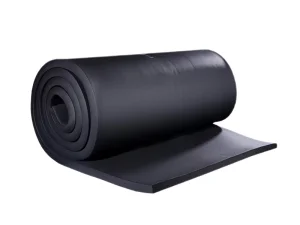
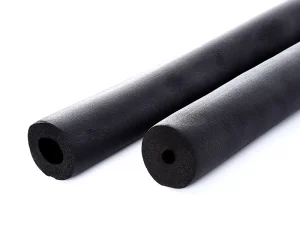
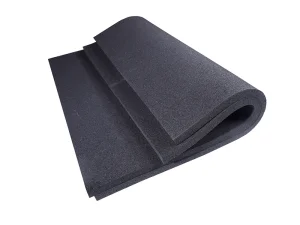
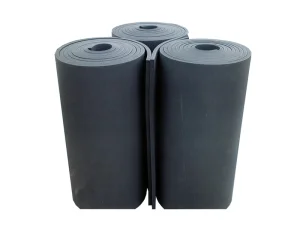
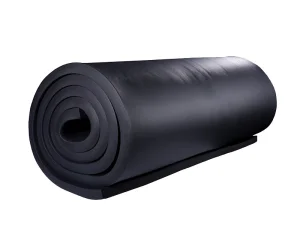
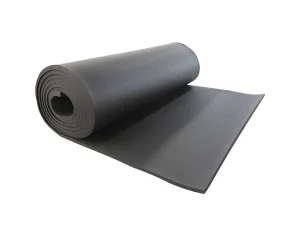
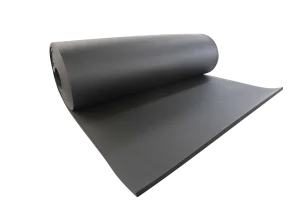
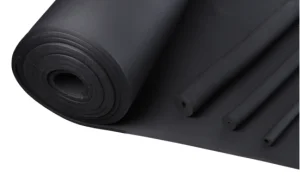
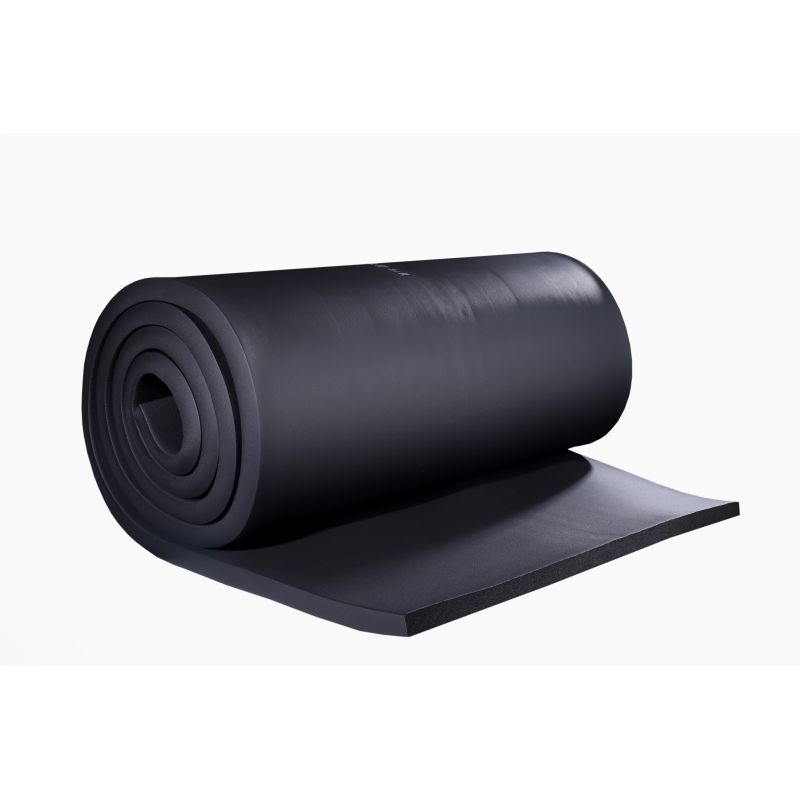
The expanded closed-cell structure makes it an efficient insulation. It is manufactured without the use of CFC's, HFC's or HCFC's. Thermal Insulation Rubber Foam Sheet is also effective for reducing HVAC noise. On cold systems, insulation thicknesses have been calculated to control condensation on the insulation outer surface, as shown in the table of thickness recommendation.

| Thickness | Width 1m | Width 1.2m | Width 1.5m | ||||
|---|---|---|---|---|---|---|---|
| Inches | mm | Size (L*W) | ㎡/Roll | Size (L*W) | ㎡/Roll | Size (L*W) | ㎡/Roll |
| 1/4" | 6 | 30 × 1 | 30 | 30 × 1.2 | 36 | 30 × 1.5 | 45 |
| 3/8" | 10 | 20 × 1 | 20 | 20 × 1.2 | 24 | 20 × 1.5 | 30 |
| 1/2" | 13 | 15 × 1 | 15 | 15 × 1.2 | 18 | 15 × 1.5 | 22.5 |
| 3/4" | 19 | 10 × 1 | 10 | 10 × 1.2 | 12 | 10 × 1.5 | 15 |
| 1" | 25 | 8 × 1 | 8 | 8 × 1.2 | 9.6 | 8 × 1.5 | 12 |
| 1 1/4" | 32 | 6 × 1 | 6 | 6 × 1.2 | 7.2 | 6 × 1.5 | 9 |
| 1 1/2" | 40 | 5 × 1 | 5 | 5 × 1.2 | 6 | 5 × 1.5 | 7.5 |
| 2" | 50 | 4 × 1 | 4 | 4 × 1.2 | 4.8 | 4 × 1.5 | 6 |

| Property | Unit | Value | Test Method |
|---|---|---|---|
| Temperature range | °C | (-50 - 110) | GB/T 17794-1999 |
| Density range | Kg/m3 | 45-65Kg/m3 | ASTM D1667 |
| Water vapor permeability | Kg/(m.s.pa) | ≤0.91×10 ﹣¹³ | DIN 52 615 / BS 4370 Part 2 1973 |
| μ | - | ≥10000 | - |
| Thermal Conductivity | W/(m.k) | ≤0.030 (-20°C) | ASTM C 518 |
| ≤0.032 (0°C) | |||
| ≤0.036 (40°C) | |||
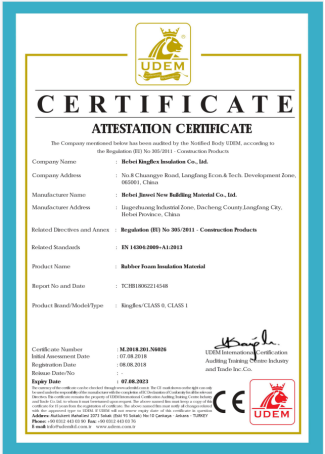
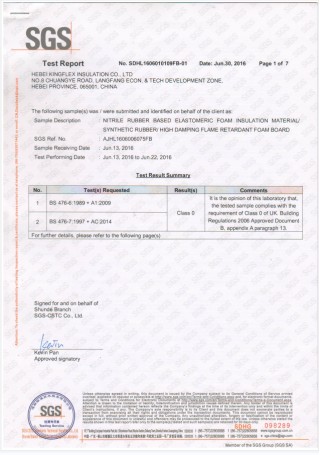
| Fire Rating | - | Class 0 & Class 1 | BS 476 Part 6 part 7 |
| Flame Spread and Smoke Developed Index | - | 25/50 | ASTM E 84 |
| Oxygen Index | - | ≥36 | GB/T 2406, ISO4589 |
| Water Absorption, % by Volume | % | 20% | ASTM C 209 |
| Dimension Stability | - | ≤5 | ASTM C534 |
| Fungi resistance | - | Good | ASTM G21 |
| Ozone resistance | Good | GB/T 7762-1987 | |
| Resistance to U.V. and weather | Good | ASTM G23 |
Fiber-free, formaldehyde-free, low VOCs, and non-particulate content ensures a safe clean environment.
Provides effective vibration damage mitigation and noise blocking for HVAC systems.
Engineered with high resistance to structural damage without relying on fragile external vapor retarders.
The three main components used in the manufacturing of elastomeric closed cell foam insulation include:
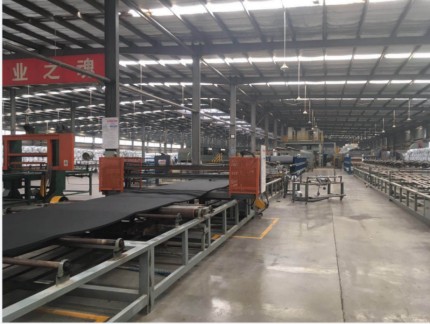
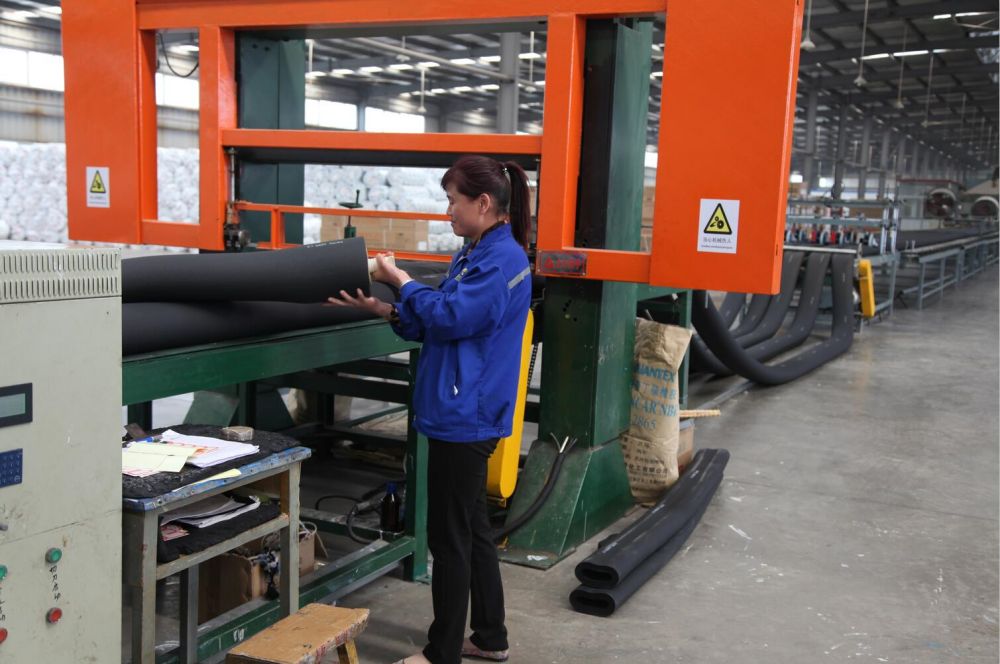
These components are combined in a large mixer, typically in batches of 500 pounds or more. The mixture is then put through extruding equipment to form a particular profile or shape, typically either a round tube or a flat sheet. The profile is heated in an oven to a specific temperature, a process that causes the chemical foaming agent to change from a solid to a gas.
When this occurs, thousands of tiny air pockets (cells)—all of which are connected—form. The profile is carefully cooled to ensure that these cells remain unbroken and intact, maintaining the material’s closed cell structure. It is then cut to size and packaged for shipment. Elastomeric foams are made without the use of chlorofluorocarbons (CFCs), hydrochlorofluorocarbons (HCFCs), or hydrofluorocarbons (HFCs), making them suitable for the toughest environmental specifications.
The expanded closed-cell structure prevents heat transfer and blocks moisture penetration, making it a highly efficient insulation material that prevents condensation on the outer surfaces of cold systems.
Yes. The sheets are manufactured without the use of CFCs, HFCs, or HCFCs, ensuring compliance with strict environmental regulations and specifications.
The material is completely fiber-free, formaldehyde-free, and low-VOC, which prevents particulate discharge into the air and ensures safe indoor environments.
Yes, the elastomeric rubber foam is highly effective at reducing HVAC system noise and blocking structural vibrations.
It is manufactured using a synthetic rubber blend (NBR and/or EPDM), Polyvinyl chloride (PVC), and a chemical foaming agent that expands under heat.
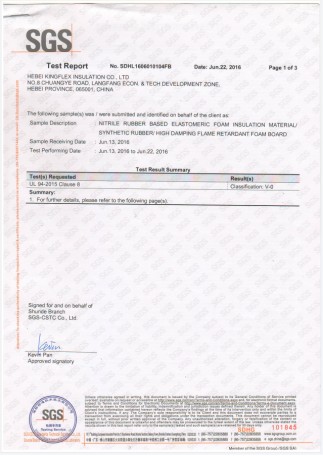
The technical data shows a fire rating of Class 0 & Class 1 when tested under the BS 476 Part 6 & 7 standard, alongside a low flame spread index.