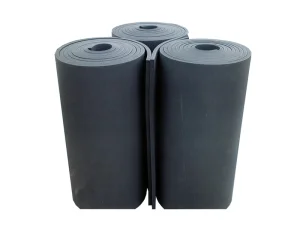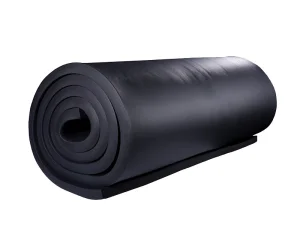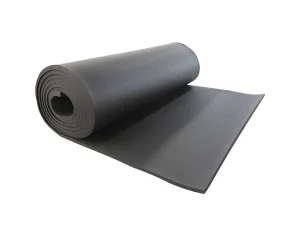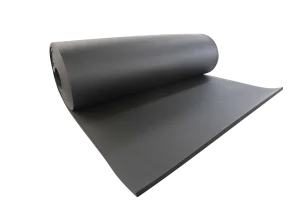
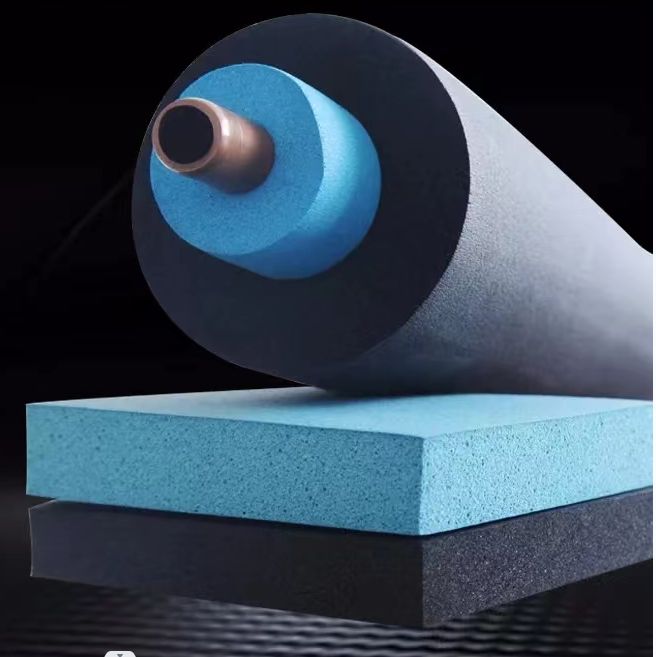
Wholesale Rubber Insulation For Cryogenic Pipeline Manufacturer, Quotes

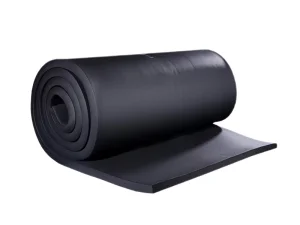
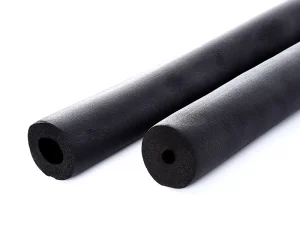
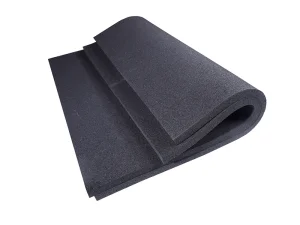
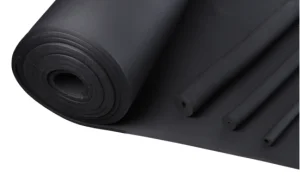
Kingflex flexible ultra-low temperature adiabatic system has the inherent characteristics of impact resistance, and its cryogenic elastomer material can absorb the impact and vibration energy caused by the external machine to protect the system structure.

Product Description

Insulation Material Display
Insulation Performance Testing
Flexible Elastomer Application
🛈

The impact from any part can be widely dispersed and attenuated by elastomer material, thus avoiding the risk of cracking due to stress concentration. And also reducing the temperature change stress is that the cooling system is superior to the traditional material such as foam glass, polyurethane PIR and PUR.
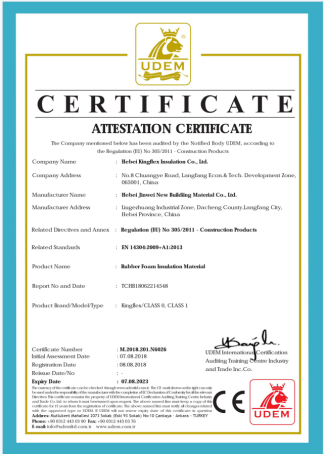
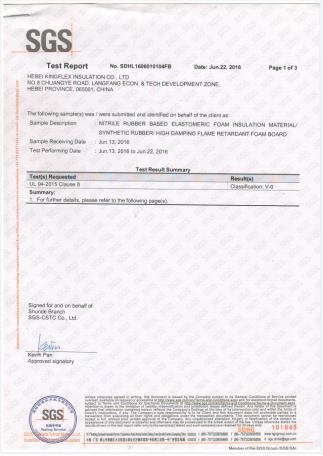
Insulation Layer Details
System Structure Diagram
Installation Blueprint
Property Base material Standard / Test Method
Kingflex ULT Kingflex LT
Thermal Conductivity -100°C, 0.028
-165°C, 0.021
0°C, 0.033
-50°C, 0.028
ASTM C177
Density Range 60-80Kg/m³ 40-60Kg/m³ ASTM D1622
Recommend Operation Temperature -200°C to 125°C -50°C to 105°C -
Percentage Of Close Areas >95% >95% ASTM D2856
Moisture Performance Factor NA <1.96x10g(m.m.Pa) ASTM E 96
Wet resistance Factor μ NA >10000 EN12086
EN13469
Water Vapor Permeability Coefficient NA 0.0039g/h.m²
(25mm thickness)
ASTM E 96
PH ≥8.0 ≥8.0 ASTM C871
Tensile Strength Mpa -100°C, 0.30
-165°C, 0.25
0°C, 0.15
-50°C, 0.218
ASTM D1623
Compressive Strength Mpa -100°C, ≤0.3 -40°C, ≤0.16 ASTM D1621
🛈

Kingflex flexible ULT insulation system does not require the use of fiber materials as expansion and contraction fillers (this type of construction method is typical on rigid foam LNG pipes).

Kingflex Dimension
Inches mm Size (L * W) ㎡ / Roll
3/4" 20 10 × 1 10
1" 25 8 × 1 8
Installation Processing
Flexible Pipe Protection
Elastomer Application View
Ultra Low Temperature System
Thermal Insulation Structure
Insulated Pipeline Site
Frequently Asked Questions
How does elastomer material reduce the risk of structural cracking?
Elastomer materials widely disperse and attenuate impact forces throughout their structure, which significantly lowers the risk of cracking resulting from stress concentration.
Does this flexible insulation system require expansion fillers?
No, the flexible ULT insulation system is designed to perform without fiber materials as expansion and contraction fillers, which is a common requirement for rigid foam LNG pipelines.
What are the recommended operating temperatures for the ULT and LT systems?
The ULT system is recommended for temperatures ranging from -200°C to 125°C, while the LT system is ideal for temperatures between -50°C to 105°C.
Why is this system superior to traditional foam glass or polyurethane PIR/PUR?
It effectively reduces temperature change stress in cooling systems, offering more robust flexibility and stress absorption than rigid foam options.
What is the closed-cell percentage of these insulation materials?
Both the ULT and LT insulation systems have a close area percentage exceeding 95%, ensuring exceptional resistance to moisture and thermal transfer.

Related Products