 Kingflex


1 / 2

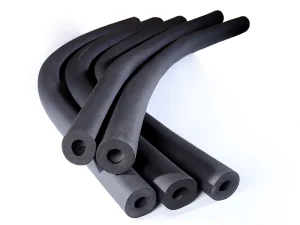
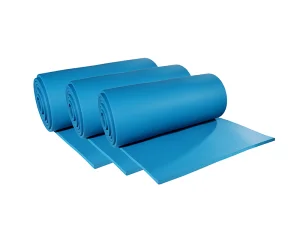
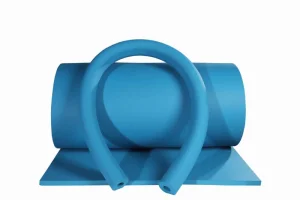
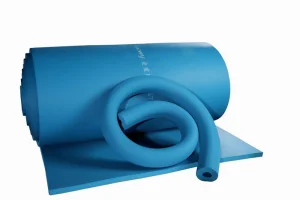
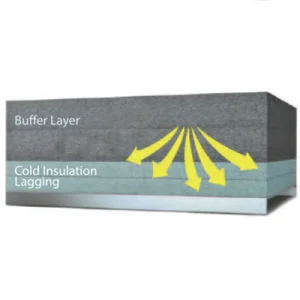
The flexible ultra-low temperature adiabatic system possesses inherent impact resistance characteristics. Its cryogenic elastomer material efficiently absorbs impact and vibration energy from external machinery, protecting the integrity of the system structure.
This product's built-in vapor barrier design significantly extends the service life of the entire cold insulation system. It effectively reduces the risk of under-insulation corrosion (CUI) on the underlying piping.
The flexible ULT insulation system does not require external fiber materials to act as expansion and contraction fillers, facilitating simplified installation and enhanced performance stability.
| ULT Technical Data | ||
|---|---|---|
| Property | Unit | Value |
| Temperature range | °C | -200 to +110 |
| Density range | Kg/m³ | 60-80 |
| Thermal Conductivity | W/(m.k) | ≤0.028 (-100°C) |
| ≤0.021 (-165°C) | ||
| Fungi resistance | - | Good |
| Ozone resistance | - | Good |
| Resistance to U.V. and weather | - | Good |

A1: The system is designed to perform in extreme temperature conditions ranging from -200°C to +110°C, making it suitable for ultra-low temperature applications.
A2: The system uses a specialized cryogenic elastomer material that naturally absorbs physical impact and mechanical vibrations from external machinery, preventing structural damage.
A3: The built-in vapor barrier prevents moisture ingress, which significantly prolongs the service life of the cold insulation system and minimizes the risk of corrosion on the metal pipes beneath the insulation.
A4: No, it features integrated expansion joints. You do not need to install additional fiber materials or fillers to handle the expansion and contraction cycles.
A5: It has outstanding thermal resistance properties, with thermal conductivity ≤0.028 W/(m.k) at -100°C and ≤0.021 W/(m.k) at -165°C.
A6: Yes, the technical data shows good resistance rating against fungi growth, ozone deterioration, as well as ultraviolet (U.V.) light and weathering.