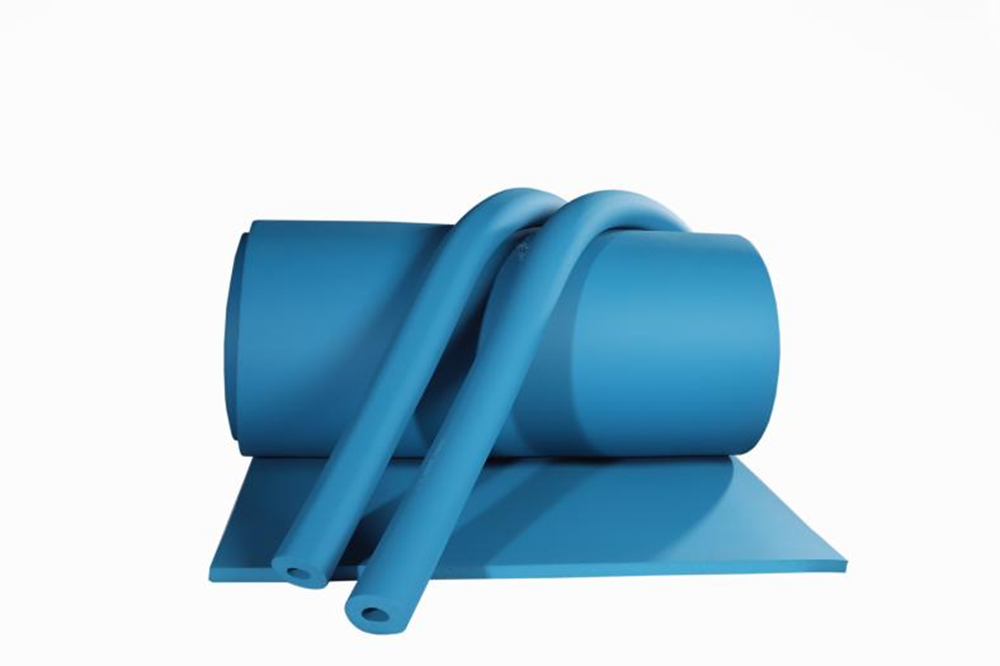
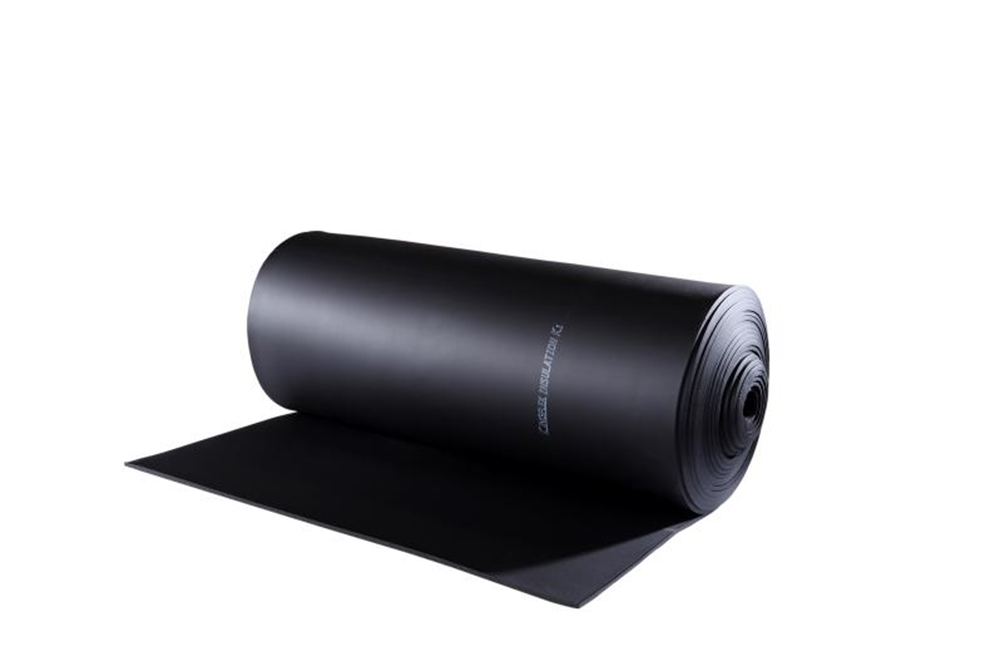
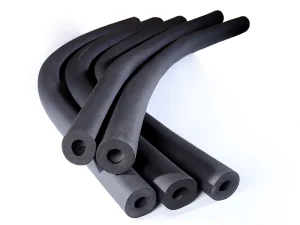
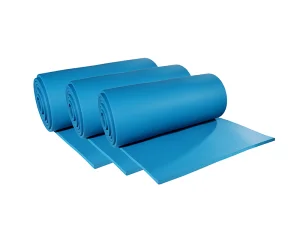
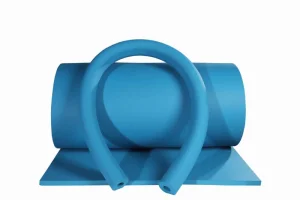
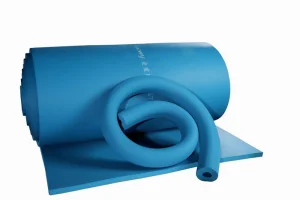
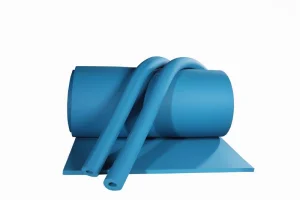
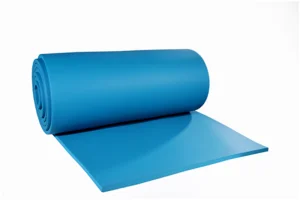
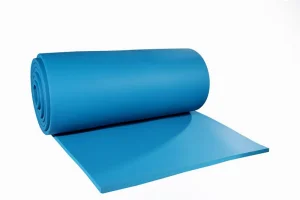
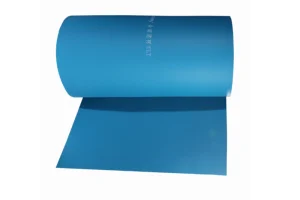
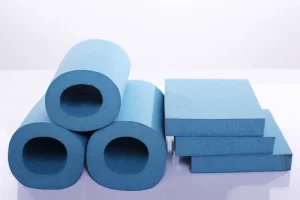
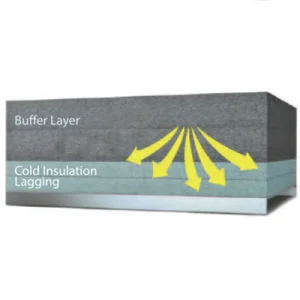
The flexible ultra low temperature adiabatic system has the inherent characteristics of impact resistance, and its cryogenic elastomer material can absorb the impact and vibration energy caused by the external machine to protect the system structure.
| Main Property |
Base material |
Test Method / Standard |
| ULT Grade |
LT Grade |
| Thermal Conductivity |
-100°C: 0.028
-165°C: 0.021 |
0°C: 0.033
-50°C: 0.028 |
ASTM C177 |
| Density Range |
60-80Kg/m³ |
40-60Kg/m³ |
ASTM D1622 |
| Recommend Operation Temp. |
-200°C to 125°C |
-50°C to 105°C |
- |
| Percentage Of Close Areas |
>95% |
>95% |
ASTM D2856 |
| Moisture Performance Factor |
NA |
<1.96x10⁻¹¹ g/(m·s·Pa) |
ASTM E 96 |
| Wet resistance Factor (μ) |
NA |
>10000 |
EN12086 / EN13469 |
| Water Vapor Permeability |
NA |
0.0039g/h·m² (25mm thickness) |
ASTM E 96 |
| PH Value |
≥8.0 |
≥8.0 |
ASTM C871 |
| Tensile Strength (Mpa) |
-100°C: 0.30
-165°C: 0.25 |
0°C: 0.15
-50°C: 0.218 |
ASTM D1623 |
| Compressive Strength (Mpa) |
-100°C: ≤0.3 |
-40°C: ≤0.16 |
ASTM D1621 |
✓
Insulation that maintains its flexibility at very low temperatures down to -200℃ to +125℃.
✓
Protects against mechanical impact and shock with high-performance cushioning.
✓
Features a low glass transition temperature for outstanding cryogenic applications.

Frequently Asked Questions
What is the operating temperature range for the ULT and LT insulation grades?
The ULT (Ultra-Low Temperature) Grade is designed for operation from -200°C to 125°C. The LT (Low Temperature) Grade is suitable for temperature ranges between -50°C and 105°C.
How does this insulation system protect against mechanical impacts?
The system features a cryogenic elastomer material with inherent impact resistance. It effectively absorbs vibration and mechanical impact energy from external machinery, protecting the overall system structure from stress and damage.
What is the percentage of closed-cell areas for these materials?
Both the ULT and LT grades feature a closed-cell ratio of greater than 95% (tested under ASTM D2856), ensuring excellent thermal performance and moisture barrier properties.
What are the thermal conductivity rates for the ULT grade at extremely low temperatures?
Tested under the ASTM C177 standard, the ULT grade achieves a thermal conductivity of 0.028 W/(m·K) at -100°C, and drops to 0.021 W/(m·K) at -165°C.
Is the insulation material resistant to water vapor transmission?
Yes, the LT grade has a wet resistance factor (μ) of over 10,000 (EN12086/EN13469) and a water vapor permeability coefficient of 0.0039g/h·m² at 25mm thickness, making it highly resistant to moisture ingress.
What are the density ranges for the ULT and LT grades?
The ULT grade maintains a density range of 60-80 Kg/m³, whereas the LT grade maintains a slightly lower density range of 40-60 Kg/m³ according to ASTM D1622 testing.
 Kingflex