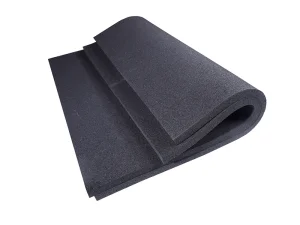
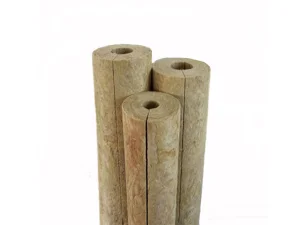
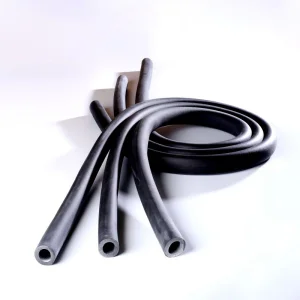
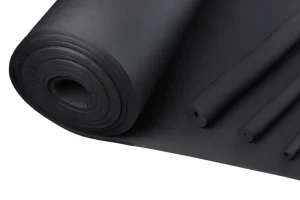
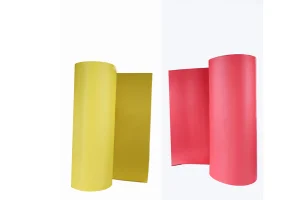
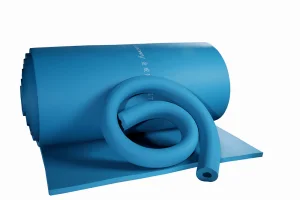
Explore our premium grade closed-cell rubber elastomeric foams and high-density mineral rock wool pipe insulations designed for industrial, HVAC, and cryogenic applications.
In mechanical engineering and thermal design, the efficiency of an insulation material is measured by its ability to resist heat transfer. This thermal resistance property is commonly quantified as the R-value. The higher the R-value, the greater the insulation power of the material, preventing energy loss and condensation.
Unlike flat surface insulation, pipe insulation deals with radial heat transfer. As the thickness of the insulation layer increases, the outer surface area increases, which affects the rate of heat loss. This introduces the concept of the critical thickness of insulation. To maximize the actual thermal resistance, engineers must analyze both the thermal conductivity (K-value) of the elastomeric rubber or mineral wool and the outer pipe diameter. Calculating the exact R-value requirement is essential to comply with local energy conservation codes like ASHRAE 90.1 and IECC.
The K-value measures the thermal conductivity of a material. In contrast, the R-value represents the total resistance to heat flow. R-value is calculated as Thickness (inches) / K-value (BTU·in/hr·ft²·°F). Low K-value results in a higher R-value at equivalent thicknesses.
Under humid conditions, cold process pipes can drop below the ambient dew point. Specifying the correct R-value keeps the outer insulation jacket temperature above the dew point, preventing surface condensation, corrosion under insulation (CUI), and mold growth.
Due to the curved profile of piping systems, flat R-values must be translated to "equivalent radial R-values." A standard 1-inch foam tube on a small-diameter copper pipe provides a different effective thermal resistance compared to the same thickness on a 12-inch steam main.
Kingflex Insulation Co., Ltd. manufactures NBR/PVC closed-cell elastomeric rubber foam and rock wool materials. The table below represents the core parameters of our standard and high-performance product ranges, demonstrating our compliance with international quality standards.
| Parameter Description | Elastomeric Foam Sheet / Tube | Rock Wool Insulation Board / Pipe |
|---|---|---|
| Material Base | NBR (Nitrile Butadiene Rubber) / PVC Blend | Fused Basalt Rock and Slag Fibers |
| Standard Thickness Range | 6mm to 50mm (Sheet); 9mm to 40mm (Tube) | 25mm to 100mm |
| Inner Diameter (ID) range | 6mm to 114mm (Standard Sizes) | 22mm to 610mm |
| Density Range | 40 kg/m³ to 55 kg/m³ | 60 kg/m³ to 150 kg/m³ |
| Thermal Conductivity (K-value) | ≤ 0.034 W/(m·k) at 0°C | ≤ 0.040 W/(m·k) at 70°C |
| Service Temperature Limit | -40°C to +105°C (-40°F to 221°F) | Up to 650°C (1202°F) |
| Closed Cell Structure Rate | > 98% (Excellent moisture barrier) | Open cell (Requires vapor barrier jacket) |
| Fire Safety Rating | Class 0 / Class 1 (BS 476), UL 94 V-0, ASTM E84 | Non-combustible (Euroclass A1) |
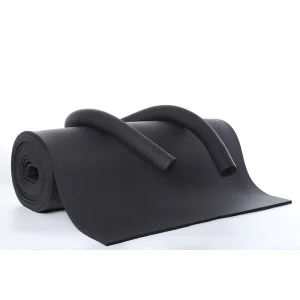
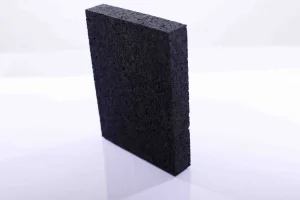
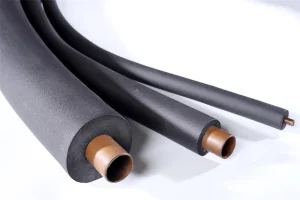
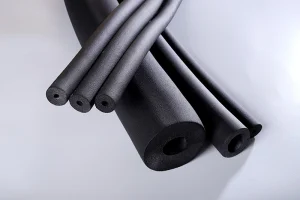
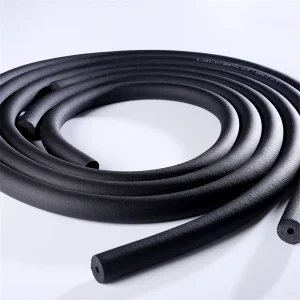
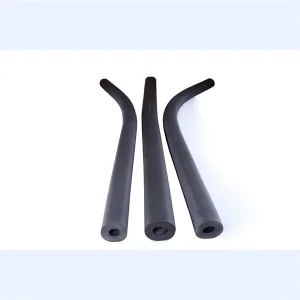
Our black elastomeric foam features an evenly distributed closed-cell structure. With a closed-cell rate exceeding 98%, it naturally blocks vapor transmission without requiring an external protective jacket in mild environments. The material offers high flexibility and a compression resilience over 80%, allowing it to absorb structural vibrations in active HVAC chillers and air ducts.
For chemical and heavy industry installations, we offer modified formulas. The Corrosion Resistant Rubber Foam Insulation Tube is designed with integrated chemical barriers to block atmospheric salts, moisture, and mild acid vapors from coming into contact with steel pipes.
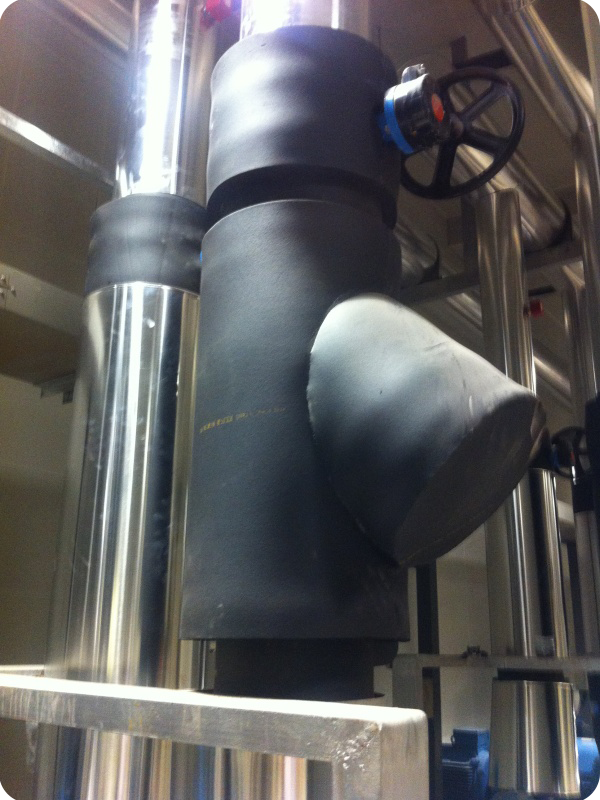
Operating out of Dacheng, the recognized capital of green building materials in China, Kingflex Insulation benefits from a highly integrated industrial ecosystem. Our proximity to raw material suppliers, integrated transport hubs, and specialized engineering talent allows us to offer high quality insulation materials at competitive price points.
Our production facilities feature five high-speed automated extrusion and blowing lines. Automated heat treatment systems ensure uniform foaming density, which keeps our product quality consistent across large production batches.
With an annual capacity exceeding 600,000 cubic meters, we support large-scale commercial real estate and industrial projects. Large-scale production minimizes operational overhead, allowing us to pass savings onto our partners through competitive pricing.
For over 16 years, Kingflex has exported high-performance thermal insulation products to more than 66 countries across North America, Europe, the Middle East, and Southeast Asia.
"By integrating raw material purchasing, compound preparation, foaming, and tube extrusion within a single site, Kingflex reduces standard lead times by 20% to 35% compared to regional manufacturers."
International engineering contractors and insulation distributors require flexible procurement terms, customizable product dimensions, and reliable batch traceability. Kingflex provides end-to-end support for custom project requirements.

Every shipment of Kingflex insulation includes a tracking number printed directly on the material and packaging. This allows us to trace materials back to their specific production run, raw material batch, and testing logs, ensuring accountability for demanding industrial and defense applications.
Building codes vary significantly across regions. While North American projects require compliance with ASTM C534 and ASTM E84 (25/50 flame spread/smoke developed index), European installations typically require CE markings and compliance with EN 14304. Kingflex tests and certifies its products with recognized test laboratories to ensure smooth local inspections.
Certified Class 0 and Class 1 ratings for British Commonwealth regions, guaranteeing low flame spread index and low heat release rate during fire events.
Our NBR/PVC elastomeric foams are formulated without PBDEs, halogenated flame retardants, or restricted plasticizers, meeting strict EU chemical safety requirements.
Meets the V-0 flammability class rating, confirming that flame self-extinguishes quickly without producing flaming droplets.
Our R&D department collaborates with international third-party certification bodies. We maintain up-to-date test reports for thermal conductivity, water vapor permeability, and fire propagation behavior. This documentation helps mechanical engineers secure quick approvals from project managers and local authorities.
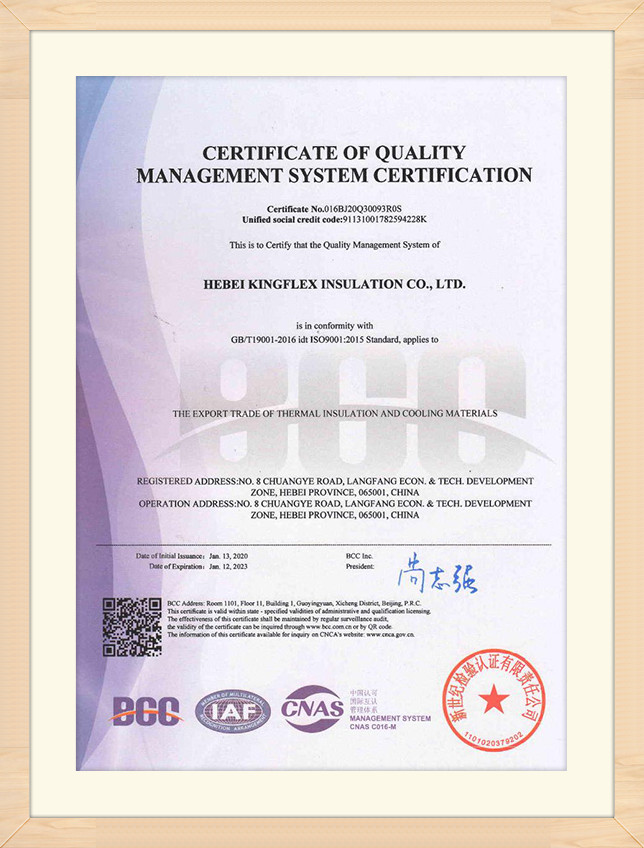
Kingflex insulation products are specified across multiple industries due to their thermal resistance, vapor barrier properties, and ease of installation.
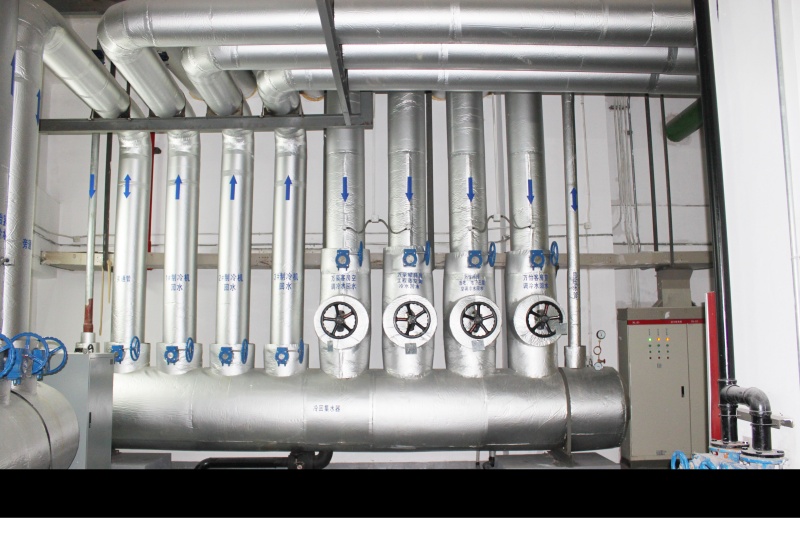
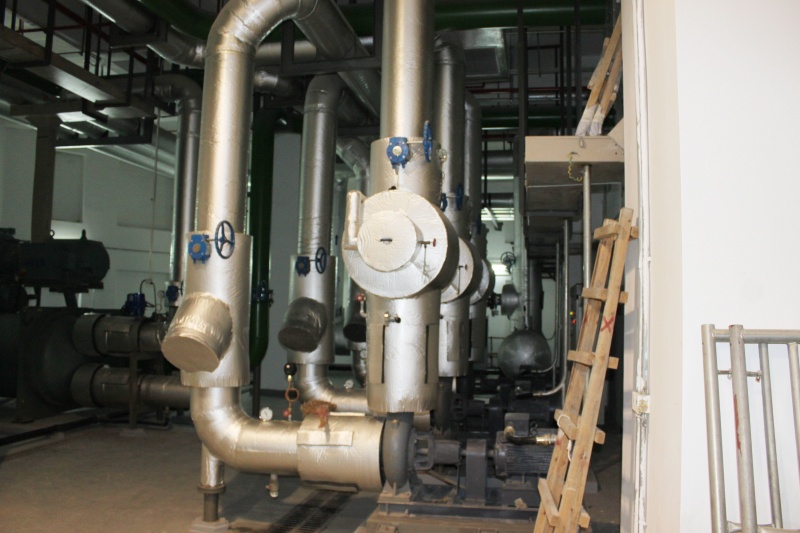
Used in commercial offices and hospitals to control condensation on chilled water pipes and duct runs. High acoustic damping properties also reduce transmission of fan and airflow noise.
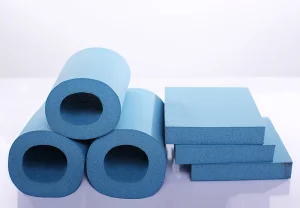
Our specialized cryogenic elastomeric sheets are designed for temperatures down to -200°C. They maintain flexibility at low temperatures and protect LNG process pipelines from thermal shock.
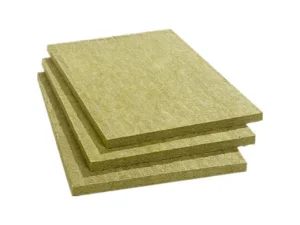
High-density rock wool boards and pre-formed pipe sections are applied to high-temperature industrial steam lines, ensuring surface temperatures remain safe for personnel.


Our wholesale pricelist depends on material specification, density, thickness, and total order volume. Understanding these variables helps procurement officers optimize their purchasing decisions.
| Product Type | Thickness Options | Volume Range (m³) | Price Indicator (FOB Tianjin) |
|---|---|---|---|
| NBR/PVC Elastomeric Tube | 9mm - 40mm | 50 - 200 m³ | Contact for Custom Quotation |
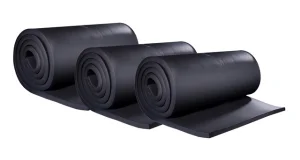
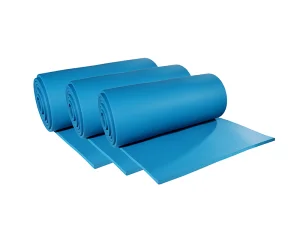
| Elastomeric Sheet Roll | 6mm - 50mm | > 200 m³ | Volume Discount Pricing Available |
| Cryogenic Special Grade Sheet | 13mm - 32mm | Min 20 m³ | Project-based Custom Quote |
| Rock Wool Insulation Pipe/Board | 25mm - 100mm | Full Container Load (FCL) | Competitive Factory Direct Rates |
Find answers to common questions about thermal insulation properties, R-values, compliance standards, and ordering processes.
Our complete range of elastomeric and mineral fiber products covers applications from industrial refrigeration to high-temperature steam lines.
 Kingflex