China Kingflex rubber foam pipe uses NBR(nitrile-butadiene rubber) as main raw material Suppliers, Quotes

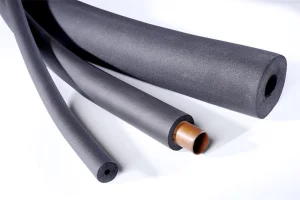
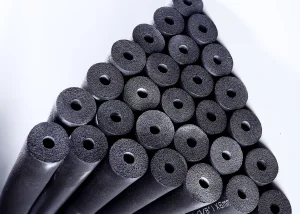
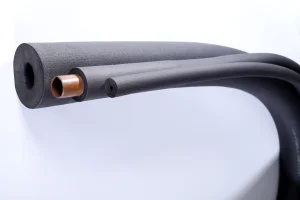
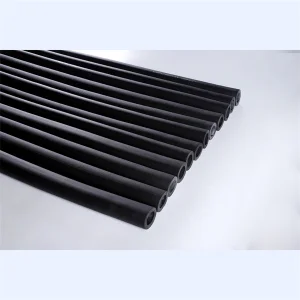
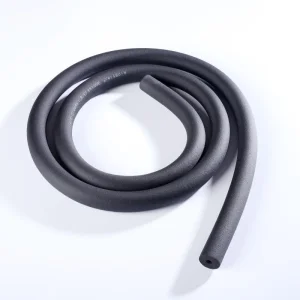
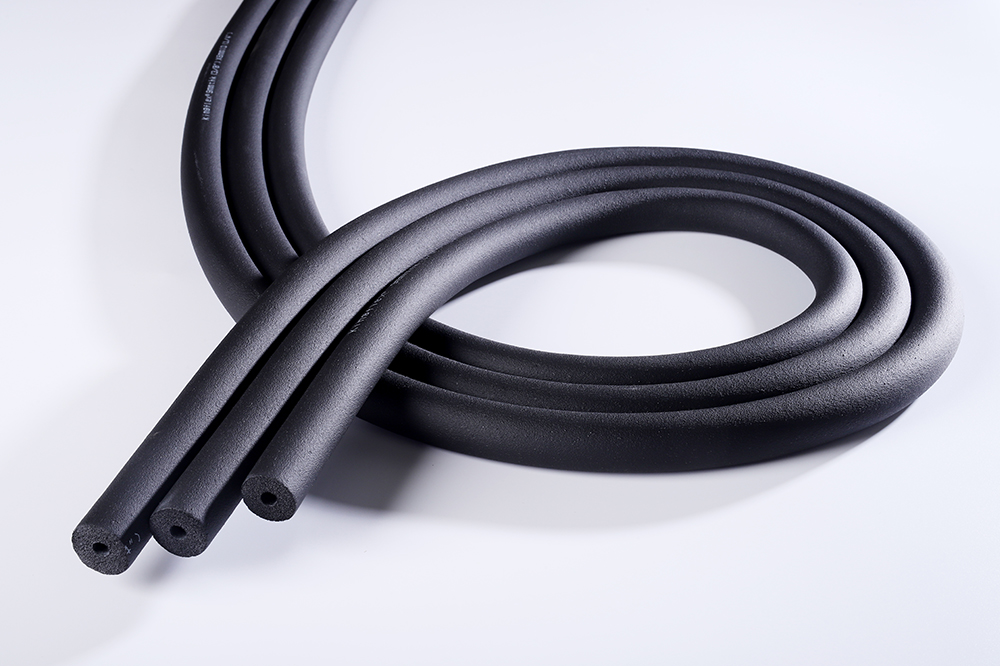
Kingflex rubber foam pipe uses NBR(nitrile-butadiene rubber) as main raw material for foaming and become a fully closed cell of flexible rubber insulation material , without any fiber material like HCHO and CFCs which are bad for ozonosphere. Suitable for thermal insulation of various pipes and equipment (-50℃-110℃). Normal wall thicknesses of 1/4”, 3/8″, 1/2″, 3/4″,1″, 1-1/4”, 1-1/2″ and 2” (6, 9, 13, 19, 25 , 32, 40 and 50mm). Standard Length with 6ft (1.83m) or 6.2ft(2m).

Product Description

Insulation Material 1
Insulation Material 2
Insulation Material 3
Insulation Material 4
Insulation Material 5
Insulation Material 6
Insulation Material 7
Insulation Material 8
Insulation Material 9
Insulation Material 10
Rubber foam pipe can be used to insulate pipes and equipment. Due to the low thermal conductivity of the rubber-plastic insulation board, it is not easy to conduct energy, so it can be used for both heat insulation and cold insulation.
Rubber foam pipe can be used to protect pipes and equipment. The material of the rubber-plastic insulation pipe is soft and elastic, which can cushion and absorb shock. The rubber-plastic insulation pipe can also be waterproof, moisture-proof and corrosion-proof.
Rubber foam pipe can play a decorative role on pipes and equipment. The appearance of the rubber-plastic insulation pipe is smooth and flat, and the overall appearance is beautiful.
Rubber foam pipe has very good stability and can play a good role in preventing fire.
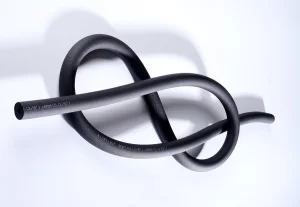
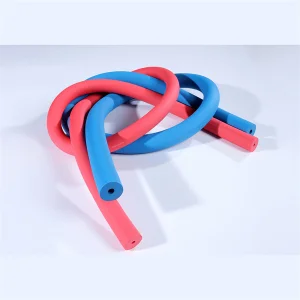
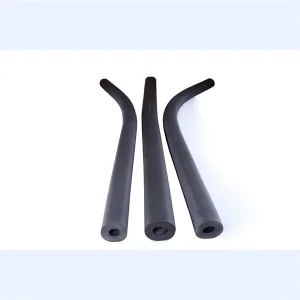
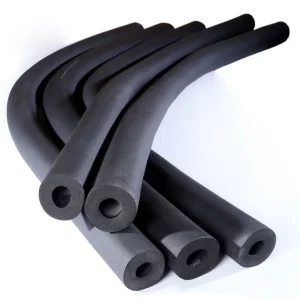
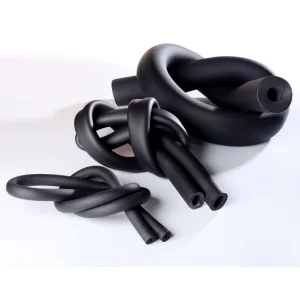
Rubber foam pipe is flexible, so it is easy to install when it needs to be bent.
Technical Demonstration
Technical Data
Property Unit Value Test Method
Temperature range °C (-50 - 110) GB/T 17794-1999
Density range Kg/m3 45-65Kg/m3 ASTM D1667
Water vapor permeability Kg/(m.s.pa) ≤0.91×10 ﹣¹³ DIN 52 615 / BS 4370 Part 2 1973
μ - ≥10000 -
Thermal Conductivity W/(m.k) ≤0.030 (-20°C) ASTM C 518
≤0.032 (0°C)
≤0.036 (40°C)
Fire Rating - Class 0 & Class 1 BS 476 Part 6 part 7
Flame Spread and Smoke Developed Index - 25/50 ASTM E 84
Oxygen Index - ≥36 GB/T 2406,ISO4589
Water Absorption, % by Volume % 20% ASTM C 209
Dimension Stability - ≤5 ASTM C534
Fungi resistance - Good ASTM 21
Ozone resistance Good GB/T 7762-1987
Resistance to U.V. and weather Good ASTM G23
Product Packaging and Storage
Frequently Asked Questions (FAQ)
What are the primary uses of rubber foam pipes?
Rubber foam pipes are primarily used to insulate, protect, and decorate pipes and equipment. They are suitable for both heat and cold insulation due to their low thermal conductivity.
What is the operating temperature range for this insulation material?
The safe temperature range for the rubber foam pipe is from -50°C to 110°C, conforming to the GB/T 17794-1999 test standard.
How does the rubber foam pipe perform in fire safety tests?
The material offers excellent fire performance, achieving Class 0 & Class 1 fire ratings under the BS 476 Part 6 & 7 standards, and has a high oxygen index of ≥36.
Is the material resistant to environmental factors like UV and moisture?
Yes, it features good resistance to fungi, ozone, UV, and general weathering. Additionally, it has a low water vapor permeability (≤0.91×10 ﹣¹³ kg/(m.s.pa)), which provides strong protection against moisture.
Is this rubber foam pipe easy to install around corners?
Absolutely. The rubber foam pipe is highly flexible and elastic, allowing it to bend easily during installation and absorb physical shocks effectively.
What is the thermal conductivity value of this insulation?
According to ASTM C 518, the thermal conductivity is ≤0.030 W/(m.k) at -20°C, ≤0.032 W/(m.k) at 0°C, and ≤0.036 W/(m.k) at 40°C, ensuring energy conservation.

Related Products