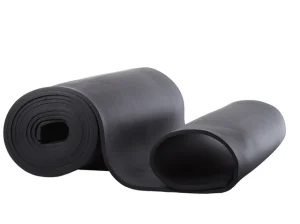
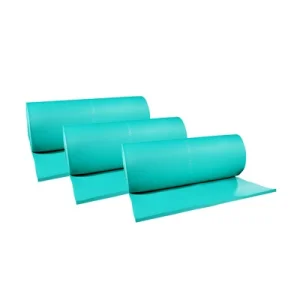
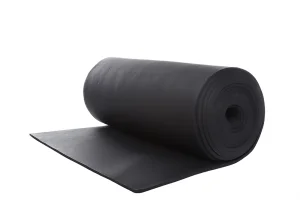
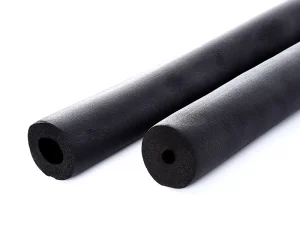
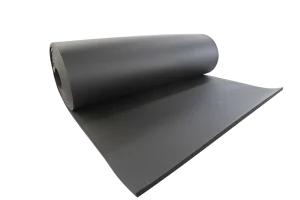
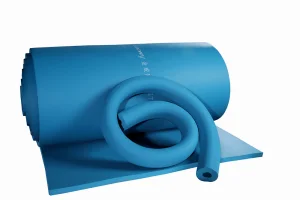
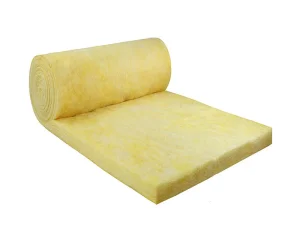
Engineered rubber foam technology designed for structural noise mitigation and extreme thermal stability.
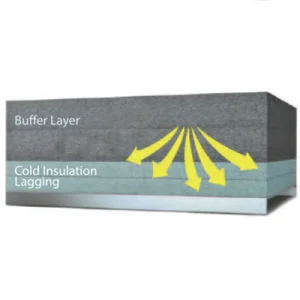
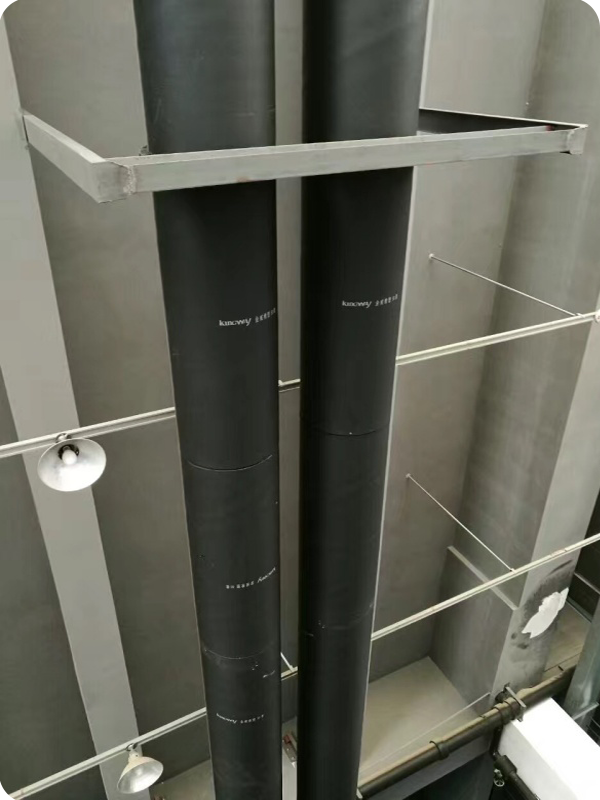
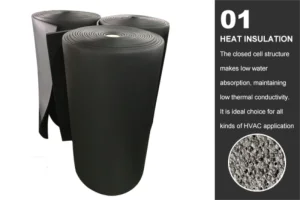
When selecting acoustic barriers for industrial and HVAC layouts, structural noise mitigation is closely linked to material density, closed-cell geometry, and air flow resistance. Kingflex's customized closed-cell NBR/PVC elastomeric rubber foam is optimized to deliver both thermal control and noise attenuation.
Standard sound isolation materials operate by absorbing incident acoustic energy (damping structural vibration) or blocking sound transmission (mass insulation). Elastomeric rubber matrices offer high damping factors due to their viscoelastic behavior. The molecular formulation allows mechanical sound wave energy to dissipate as micro-thermal heat within the cellular structures.

Acoustic and thermal parameters designed for HVAC engineers, architectural consultants, and procurement managers.
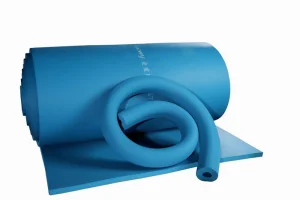
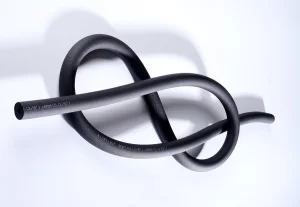
| Property Parameter | NBR/PVC Elastomeric Foam Sheet | NBR/PVC Insulation Tubing / Pipe | Testing Protocol Standards |
|---|---|---|---|
| Base Material Matrix | Nitrile Butadiene Rubber / PVC Blend | Nitrile Butadiene Rubber / PVC Blend | ASTM D1056 / ISO 6916 |
| Density range | 40 - 55 kg/m³ | 40 - 55 kg/m³ | ASTM D1622 / ISO 845 |
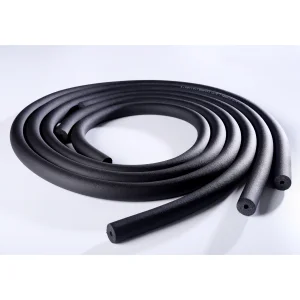
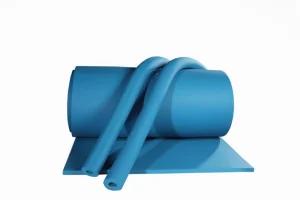
| Thickness Availability | 6mm - 50mm | 9mm - 40mm (ID: 6mm - 114mm) | Standard Metric / Custom Calibration |
| Thermal Conductivity (λ) | ≤ 0.034 W/(m·K) at 0 °C | ≤ 0.034 W/(m·K) at 0 °C | ASTM C177 / ASTM C518 |
| Water Vapor Permeability | ≥ 1.0 × 10¹¹ g/(Pa·s·m) (μ ≥ 10,000) | ≥ 1.0 × 10¹¹ g/(Pa·s·m) (μ ≥ 10,000) | ASTM E96 / BS EN 12086 |
| Service Operating Temp | -40 °C to +105 °C | -40 °C to +105 °C | ASTM C411 / ISO 188 |
| Fire & Smoke Performance | Class 0 (BS 476 Part 6/7) / V-0 Rated | Class 0 (BS 476) / Self-Extinguishing | UL94 / BS 476 / ASTM E84 |
| Sound Absorption (NRC) | Up to 0.65 (with engineered micro-perforation) | Acoustic Insertion Loss > 25 dB(A) | ASTM C423 / ISO 354 |
Building next-generation smart materials for noise mitigation and carbon-neutral construction.
We are engineering halogen-free, bio-derived polyurethane and nitrile polymers to lower life-cycle carbon impact while maintaining fire performance.
Introducing hybrid open/closed-cell models. These designs optimize low-frequency sound absorption while preserving condensation resistance.
Integrating parametric data into downloadable PDF datasheets and BIM models. This allows engineering teams to accurately simulate sound loss.
Providing custom engineering where standard insulation products fall short.
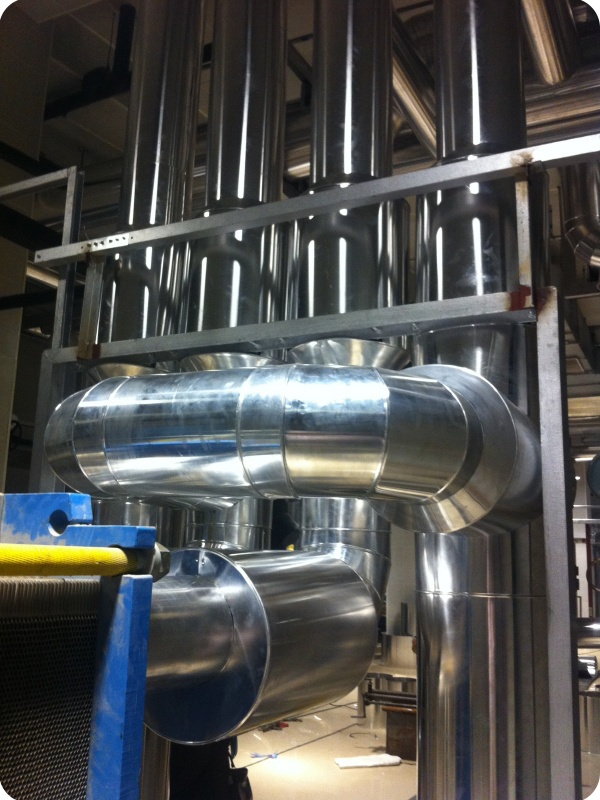
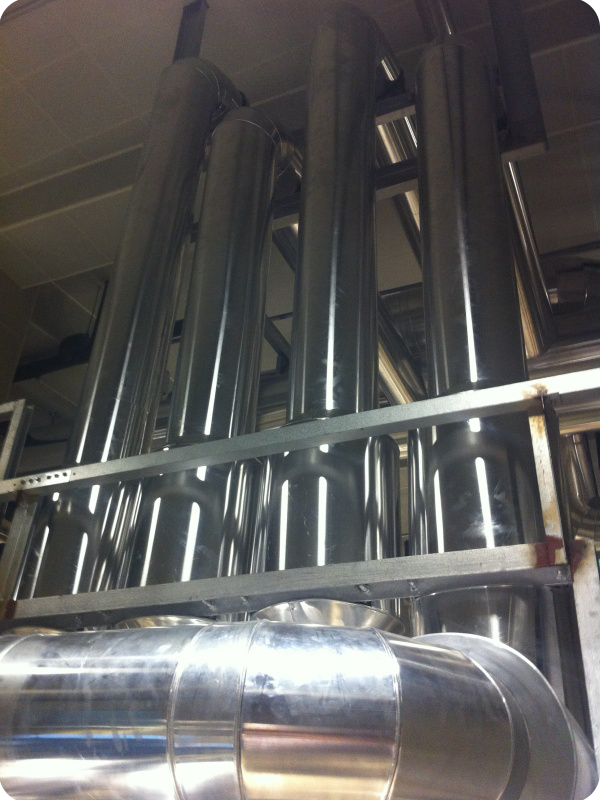
Eliminate air duct rumble and structural sound transfer in HVAC units. Closed-cell rubber foam isolates low-frequency machinery noise while preventing condensation in high-humidity areas.
Cryogenic insulation systems require specialized designs. Our materials withstand sub-zero conditions down to -200 °C while dampening acoustic stress in LNG storage piping.
Advanced electronics and pharmaceutical labs require dust-free environment controls. Our fiber-free elastomeric material prevents particulate release under high airflow velocity.
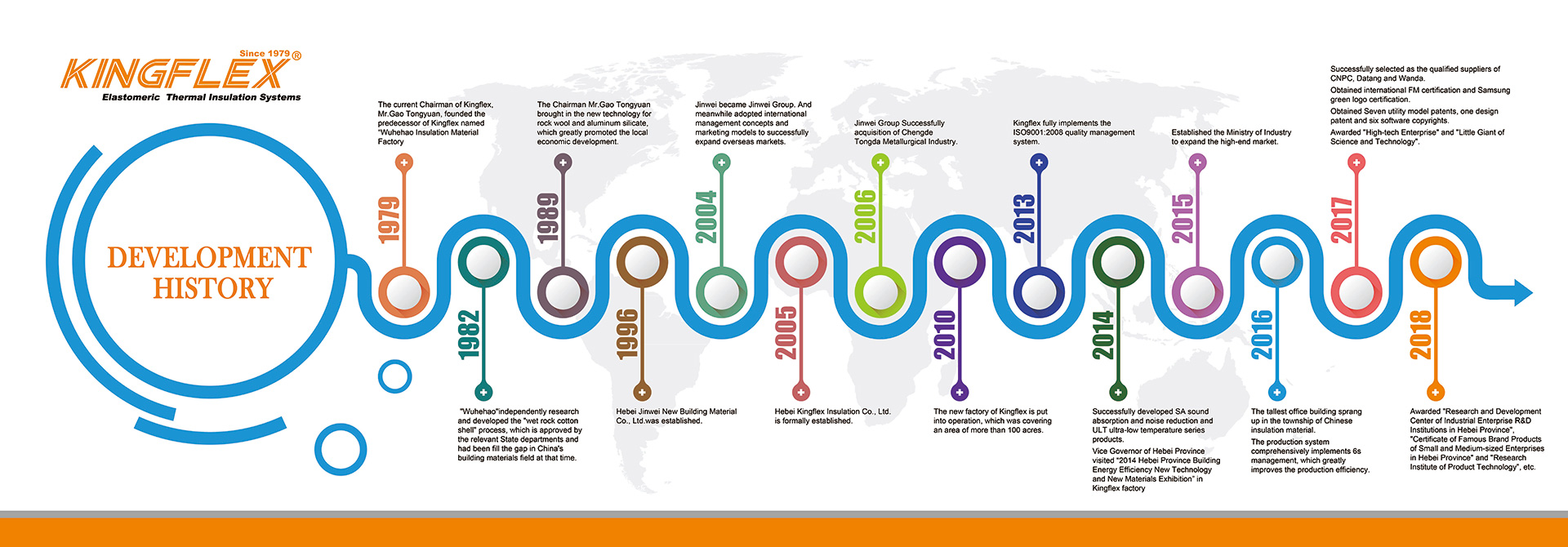
Our manufacturing facility is located in Dacheng, China—the recognized capital of green-building materials. Backed by the Jinwei Group (established in 1979, with over 40 years of manufacturing experience), Kingflex operates 5 automated production lines.
With an annual output exceeding 600,000 cubic meters, we serve as an energy-saving industrial partner. We coordinate research, testing, logistics, and post-sale engineering to ensure projects stay on schedule.
Continuous validation of thermal resistance, fire retardancy, and acoustic cell structures.
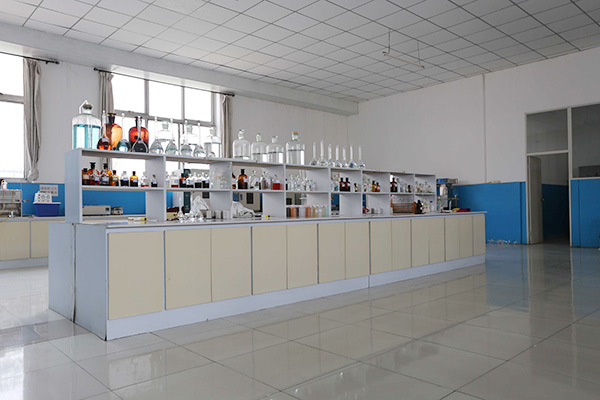
Checking cell homogeneity to maintain sound dampening and moisture resistance.

Verifying thermal conductivity under various temperature levels (-196°C to +105°C).
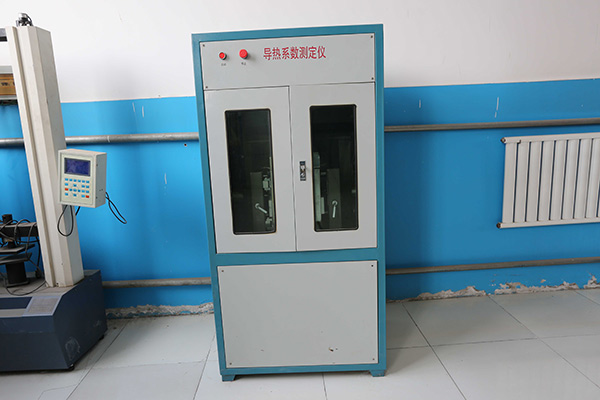
Ensuring the material has >80% recovery under compression for long service life.
Our products undergo validation to meet global safety and mechanical standards.
UK fire standard for structural materials.
Ensures flame-retardant performance.
Certified free from heavy metals.
Standard for preformed elastomeric insulation.
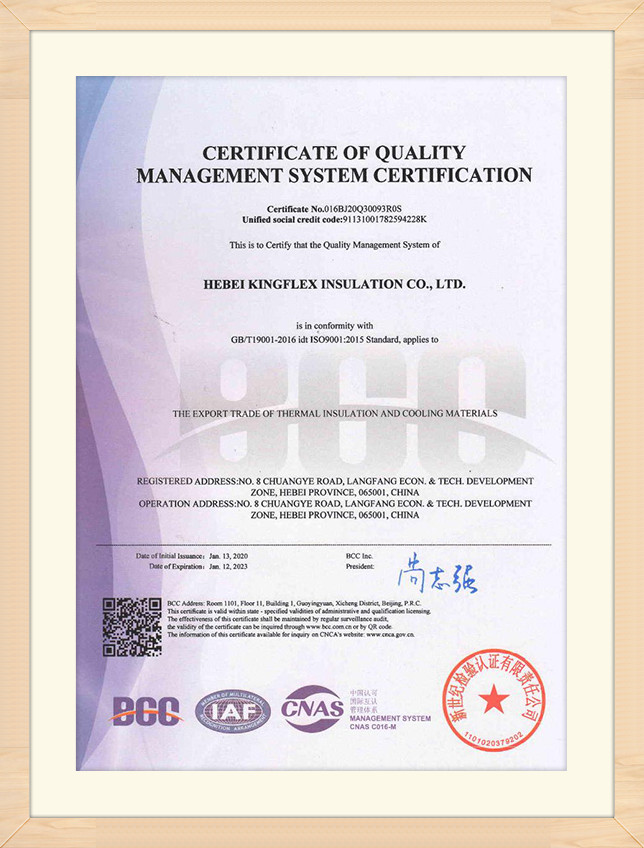


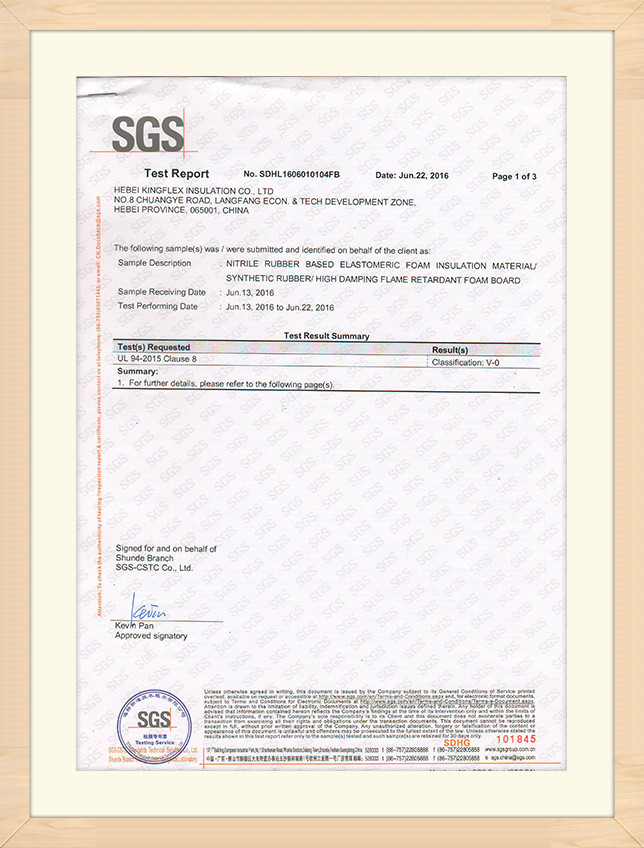
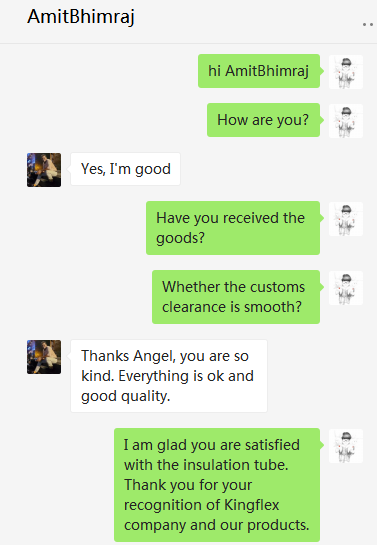
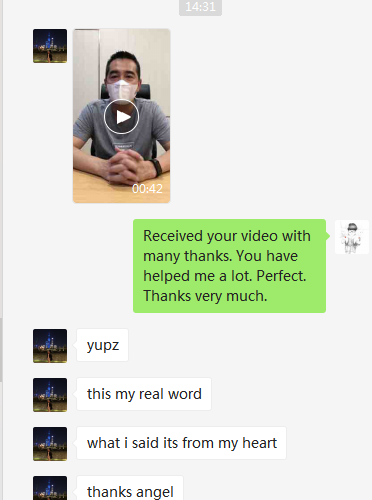
We prioritize open communication and accurate specification matching. Our order tracking, shipping updates, and quality control logs are shared directly with our clients. We work to resolve any design challenges before the material leaves the factory.
"Technical parameters (PDF specification validation) were fully confirmed before shipment. Density and fire ratings match our domestic project codes."
— Infrastructure Partner, Middle East



Our materials are utilized in transport networks, district cooling systems, and chemical processing facilities.
Addressing design considerations, structural safety regulations, and application requirements.
Full-spectrum industrial sound control and low-temperature thermal isolation lines.
 Kingflex