Engineered for high-specification construction projects in Milan, Rome, and across Italy. Compliant with stringent European fire protection standards.
The Italian construction and mechanical engineering sectors are undergoing a massive transition driven by European Union decarbonization mandates and strict national legislation. With the enforcement of the Italian Ministerial Decree 3 August 2015 (Codice di Prevenzione Incendi), thermal insulation materials installed in public, commercial, and high-occupancy structures are subject to meticulous fire safety and smoke toxicity assessment.
Traditional elastomeric insulation often contains halogenated flame retardants like chlorine or bromine. While effective at dampening flames, these compounds release dense, corrosive, and highly toxic acid gases (such as hydrogen chloride) during a fire. This poses extreme risks to human safety and can destroy expensive sensitive data infrastructure. Halogen-free closed-cell insulation materials eliminate this hazard completely, complying with the stringent EN 13501-1 Euroclass s1 classification (minimal smoke generation).
In Italy, specifyng the right thermal barrier is a balance of thermal performance and liability protection. From the industrial districts of Lombardy and Veneto to the naval shipyards of Liguria and Trieste, engineers select halogen-free materials to fulfill complex project criteria:
Understanding the macro trends forcing global EPC (Engineering, Procurement, and Construction) companies to transition to certified non-halogenated thermal systems.
Across the globe, industrial plant owners, shipbuilders, and building contractors are facing rising pressure to reduce VOC (Volatile Organic Compound) levels and restrict hazardous materials. Major global chemical initiatives like the EU’s REACH registry and the RoHS Directive continue to phase out hazardous plasticizers and fire retardants. This shift directly influences purchasing protocols for global supply chains, where modern engineering guidelines for data centers, cruise ships, and pharmaceutical cleanrooms explicitly ban the installation of halogen-bearing components.
Furthermore, energy pricing volatility has placed thermal efficiency at the top of industrial operational priorities. Industrial facilities operate systems at temperature extremes—from cryogenic cooling circuits (-196°C) to high-pressure steam conduits (+105°C). Halogen-free flexible insulation from leading manufacturers maintains thermal conductivity (λ) values as low as 0.035 W/(m·K), ensuring high-efficiency energy preservation without compromising toxicity safety.
| Insulation Type | Halogen Content | Smoke Toxicity Index | Moisture Vapor Resistance (μ) | Applicable Temp. Range | Italian CAM Suitability |
|---|---|---|---|---|---|
| Kingflex Halogen-Free Elastomer | 0% (Totally Free) | Extremely Low (EN 13501 s1) | ≥ 10,000 (Closed Cell) | -40°C to +105°C | Highly Recommended |
| Standard NBR/PVC Foam | High (Contains Cl/Br) | High Acidic Smoke (s3) | ≥ 7,000 | -50°C to +105°C | Restricted in Public Spaces |
| Rock Wool Material | 0% | Zero Smoke (A1 Non-combustible) | μ = 1 (Open structure) | Up to +650°C | Needs external vapor barrier |
| Polyurethane / PIR Board | Low to Medium | High smoke density | Varies (Rigid structure) | -150°C to +120°C | Acceptable for specific uses |
Operating under the prestigious Jinwei Group, which commands a heritage spanning more than 40 years since its foundation in 1979, Kingflex Insulation Co., Ltd. has established itself as the leading force in global energy-saving systems. Kingflex’s state-of-the-art production complex, located in Dacheng, China—the globally recognized capital of green building technologies—combines high-output chemical processing with rigorous international quality standards.
By operating 5 fully automated assembly lines, Kingflex achieves an annual production capacity exceeding 600,000 cubic meters. This scale of production guarantees that Italian procurement teams and large-scale EPC contractors receive stable supply lines even during peak development seasons. By combining massive domestic raw material purchasing power with highly optimized automated curing processes, Kingflex offers exceptional pricing models that offset the typical cost premium associated with halogen-free elastomeric formulations.
Kingflex bridges the gap between Eastern manufacturing efficiency and European regulatory compliance. With our dedicated team of 8 professional R&D engineers, we continuously refine our polymer blends. This ensures that every roll and pipe section shipped to Venice, Milan, Genoa, or Naples meets critical standards: BS 476, CE, REACH, RoHS, UL94, and ASTM. Every production batch is fully traceable, providing the transparency that project directors require.
m³ Annual Production Capacity
Years of Industrial Leadership
Countries Export Destination
Halogen Content (LSZH compliant)
Deploying specialized Kingflex halogen-free materials to solve severe environmental and engineering challenges across major Italian industrial sectors.
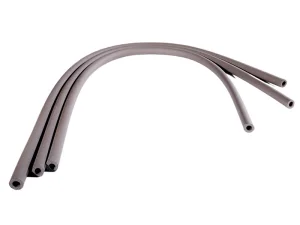
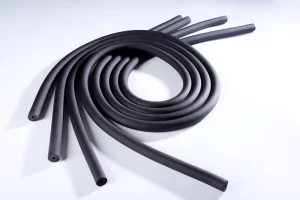
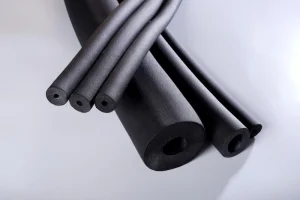
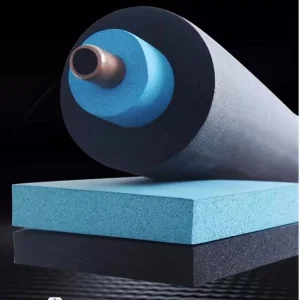
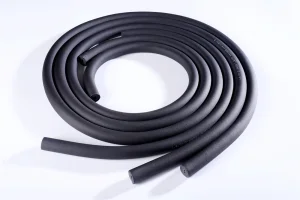
Shipbuilding demands materials with the highest safety profile. Kingflex halogen-free thermal pipe systems are installed in maritime passenger cabins and chilled-water systems to prevent toxic halogen fumes in enclosed vessel compartments, meeting international marine fire protocols.
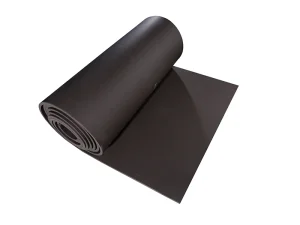
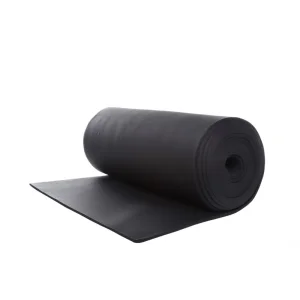
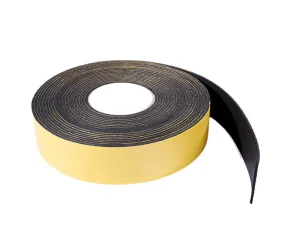
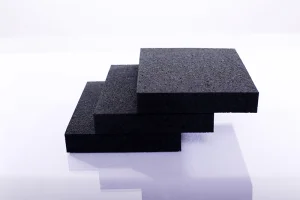
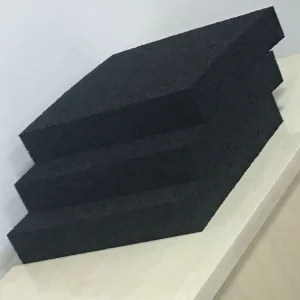
Public rail lines and underground stations require severe smoke controls. Specifying Kingflex sheet rolls ensures public comfort and complies with standard EN 45545 requirements, providing thermal regulation for HVAC ducts without risking halogen gas exposure.
High moisture environments in dairy and winery facilities demand closed-cell structure insulation. The mold-resistant and halogen-free properties of Kingflex NBR/PVC sheets prevent pipe corrosion and avoid contaminating food processing lines.
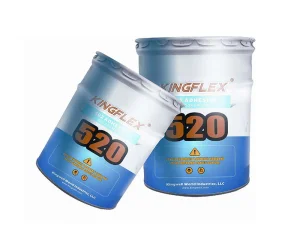
Complete your insulation systems with certified auxiliary components to prevent thermal bridging and vapor leaks.
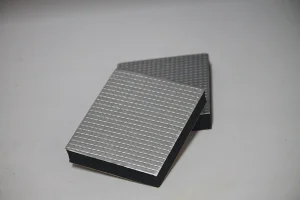
Comprehensive sizing and technical formulations to suit refrigeration, cryogenics, and standard pipeline networks.
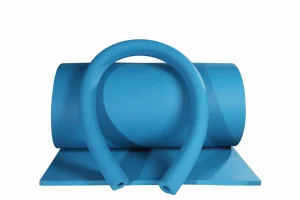
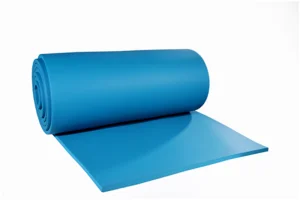
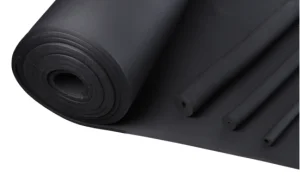
Every roll and tube produced in our automated factory follows meticulous structural controls. The formulation utilizes high-quality NBR/PVC elastomeric matrix to produce uniform cell distribution.
Expert clarifications regarding installation, chemical resistance, and certification standards for the Italy market.
It is primarily utilized for HVAC ducts, commercial and residential air conditioning pipelines, building thermal envelopes, industrial pipeline insulation, and low-frequency acoustic noise damping systems.
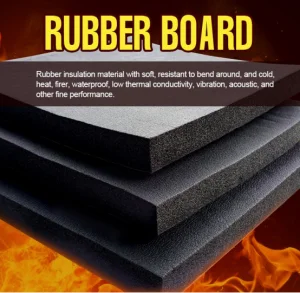
Yes, all Kingflex elastomeric materials are engineered with advanced self-extinguishing flame-retardant properties, fully meeting national building codes and European fire classifications.
Rubber foam has a flexible, closed-cell matrix providing high resistance to water vapor absorption (μ ≥ 10,000) and is ideal for preventing condensation in HVAC systems. Rock wool has an open-cell, fibrous structure suitable for high-temperature applications (above 150°C to 650°C).
Yes, Kingflex supports full OEM integration. We customize thickness, inner diameter, colored outer finishes, self-adhesive backings, and aluminum foil coverings to match exact mechanical specifications.
Our solutions have passed BS 476, CE, REACH, RoHS, UL94, and ASTM tests, ensuring full compliance with European fire protection and environmental regulations.
When properly installed according to manufacturer guidelines, Kingflex rubber foam insulation maintains structural and thermal integrity for 10 to 15 years.
 Kingflex