Explore our foundational range of premium thermal, acoustic, and low-temperature elastomeric products manufactured to rigorous global specifications.
Annual Production Capacity
Industrial Heritage (Est. 1979)
Global Export Footprint
Closed-Cell Foaming Rate
In modern industrial design and commercial architecture, HVAC systems consume up to 40% of total energy in buildings. Efficient thermal insulation is no longer merely a supplementary option; it is a foundational component of sustainability and system durability. Elastomeric rubber foam insulation is at the forefront of this technological shift, preventing energy loss, eliminating external condensation, and providing crucial acoustic dampening.
Internationally, strict green building compliance standards (such as LEED, BREEAM, and DGNB) mandate exceptionally low thermal transmittance values (U-values) for all air distribution networks. Uninsulated or poorly insulated ventilation ducts in large-scale structures (like commercial high-rises, pharmaceutical cleanrooms, or chemical processing plants) suffer massive thermal energy leaks. In cooling-dominated applications, warm ambient air colliding with cold duct surfaces leads to immediate moisture condensation. This causes structural damage, biological growth (mold/mildew), and premature duct corrosion. Closed-cell NBR/PVC elastomeric structures completely eliminate these risks by integrating an inherent, continuous water vapor barrier throughout the entire insulation thickness.
Industrial installations must meet stringent national and international performance metrics before dynamic building envelope testing is approved:
An in-depth look at Dacheng's green-building material ecosystem and Kingflex's massive manufacturing operations.
Dacheng, China is globally recognized as the manufacturing capital of green-building materials. This concentrated industrial ecosystem provides unmatched access to chemical raw materials, specialized processing machinery, and highly skilled engineering talent. The synergy of this cluster optimizes production costs and drives product development, ensuring superior cost-performance ratios for global procurement teams.
Kingflex runs 5 highly automated, continuously operating assembly lines. Our annual output capacity exceeds 600,000 cubic meters. This high degree of automation ensures perfect uniformity in cell morphology and mechanical properties, while keeping production cycles short and costs highly competitive.
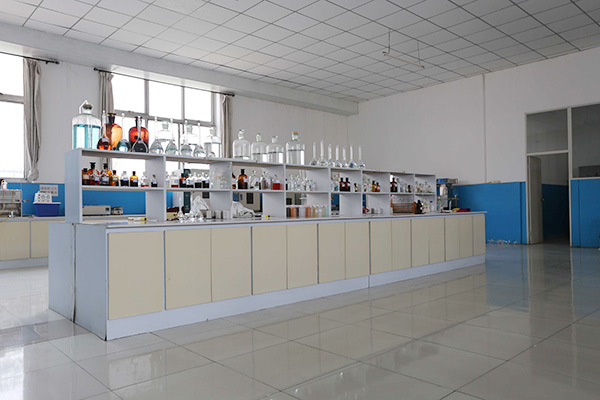
Every batch of Kingflex elastomeric foam undergoes rigorous testing before shipment. We verify density levels, thermal conductivity, cell structures, and fire behavior to guarantee full compliance with BS, ASTM, and CE requirements. This level of quality control ensures reliable field performance across all climates.
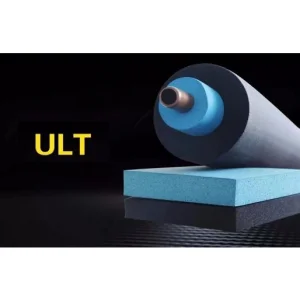
A comprehensive analysis of our flagship closed-cell NBR/PVC thermal insulation systems for ventilation ducting and industrial pipeline applications.
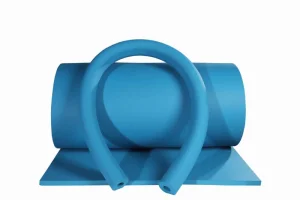
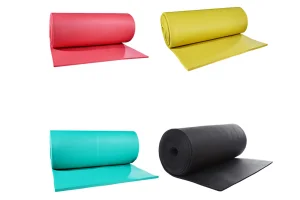
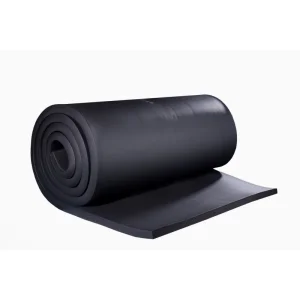
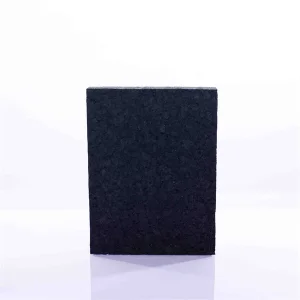
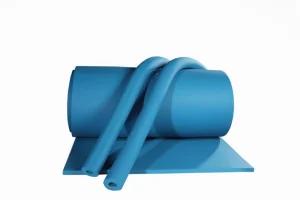
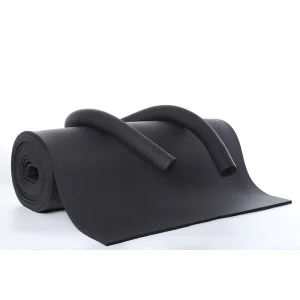
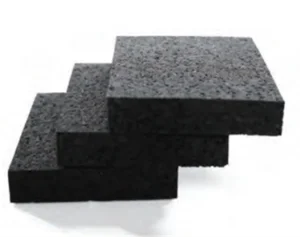
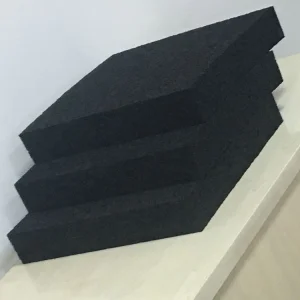
Engineered primarily for large flat or curved surfaces, these NBR/PVC sheets are ideal for commercial rectangular and circular air distribution ducts, equipment casings, and storage tanks. The material's flexibility allows it to conform to complex geometries, minimizing joint gaps and thermal bridging.
| Parameters | Specifications |
|---|---|
| Material Composition | Nitrile Butadiene Rubber (NBR) and Polyvinyl Chloride (PVC) blend |
| Available Thicknesses | 6mm, 9mm, 13mm, 15mm, 19mm, 25mm, 32mm, 40mm, up to 50mm |
| Density Range | 40 kg/m³ to 55 kg/m³ (optimizes mechanical strength and low thermal conductivity) |
| Service Temperature Range | -40°C to +105°C (extends down to cryogenic systems when multi-layered) |
| Thermal Conductivity (λ) | ≤ 0.034 W/(m·K) at 0°C (extremely low and stable thermal transfer) |
| Closed-Cell Rate | > 98% (delivers outstanding water vapor resistance) |
| Fire Classification | Flame retardant, self-extinguishing (meets BS 476, UL94 V-0 standards) |
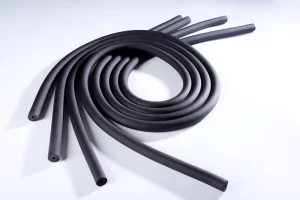
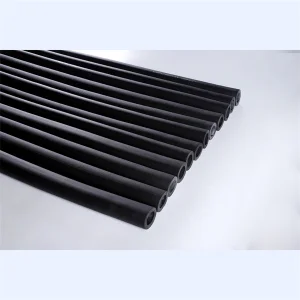
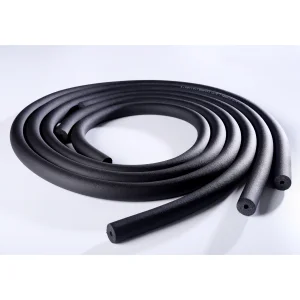
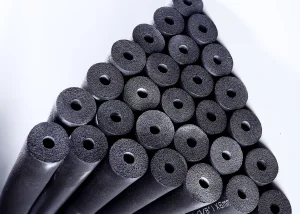
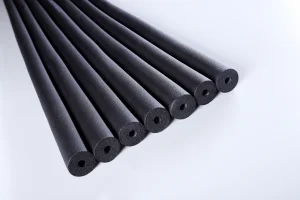
Specially manufactured for pipe insulation across HVAC chillers, heating lines, solar systems, and heavy industrial process piping. Our advanced spraying line technology ensures uniform coating thickness and precise inner diameters for seamless installation.
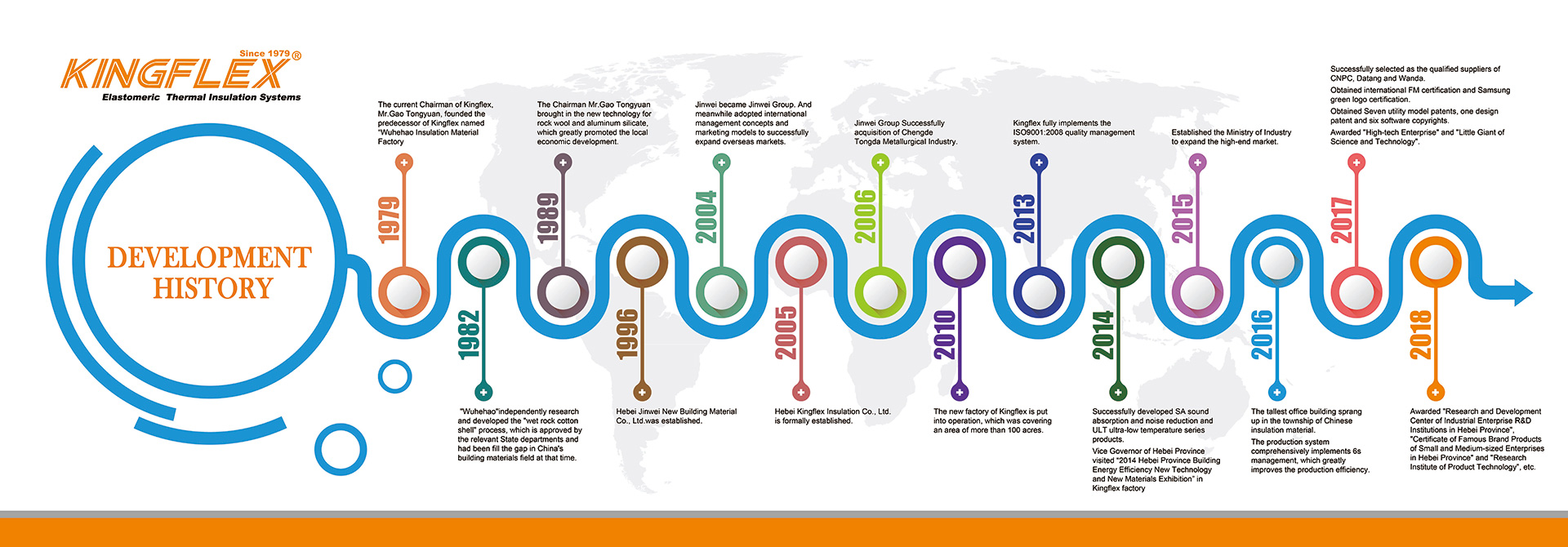
A history of pioneering thermal insulation technology, driven by advanced manufacturing capabilities and specialized engineering expertise.
Kingflex Insulation Co., Ltd. is a leading manufacturer and exporter of energy-saving, eco-friendly thermal insulation materials. Based in Dacheng, China, we combine advanced R&D, mass production, and global distribution under one roof. Our focus is on delivering comprehensive thermal, cold, and acoustic insulation solutions that meet the evolving demands of the global construction and industrial manufacturing sectors.

Kingflex was established by the Jinwei Group (Kingway Group), a pioneer in industrial insulation founded in 1979. As the first thermal insulation manufacturer north of the Yangtze River, we leverage over 40 years of manufacturing experience. We continue to build on this legacy by developing new elastomeric materials and processes to support sustainable, energy-efficient building designs globally.
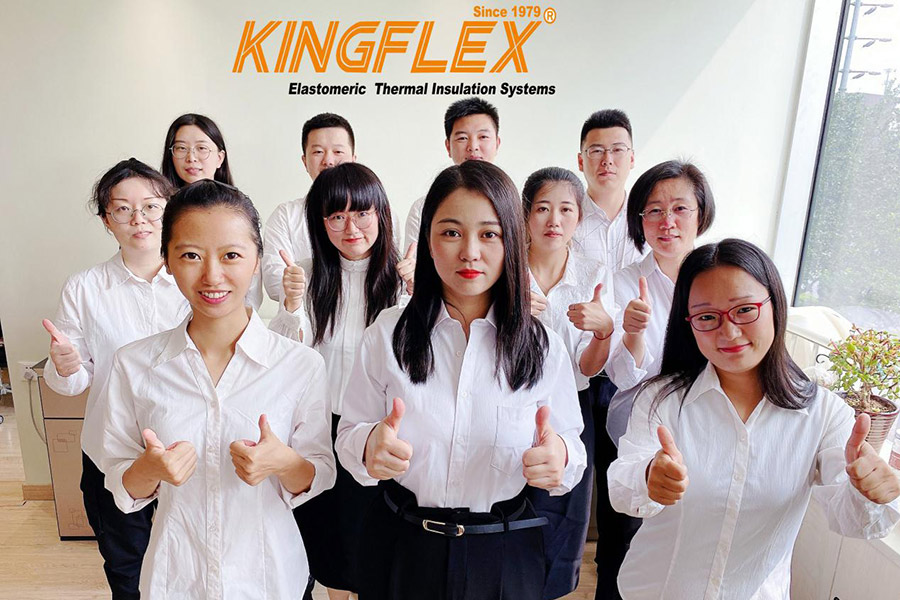
Our workforce features a dedicated R&D division led by 8 professional engineers, alongside 6 international sales specialists and over 230 production workers. Our R&D department continuously tests and refines product formulations, improving cell structures, increasing fire resistance, and expanding operational temperature limits to meet the demands of advanced cryogenic and high-temperature projects.
Kingflex operates 5 large-scale automatic assembly lines, which are designated production facilities for major energy, chemical, and electrical projects. With an annual capacity of over 600,000 cubic meters, we support large-scale commercial developments and industrial installations globally. Our products are exported to 66 countries, ensuring reliable thermal performance in diverse climates.

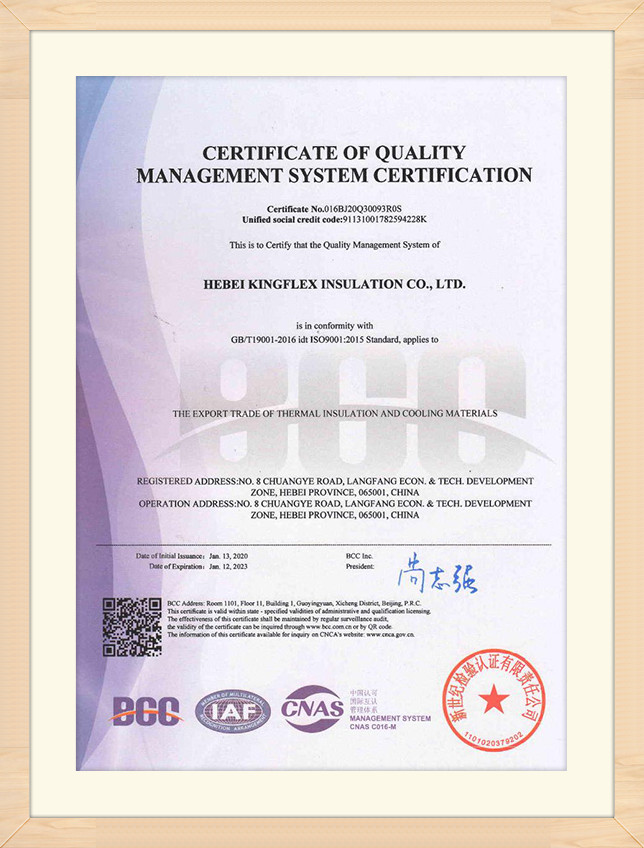
Our commitment to quality is backed by comprehensive international testing certifications. Kingflex products regularly pass strict audits for international standards:

A detail of our products in service, demonstrating excellent performance across extreme environments and challenging installations.
Installed inside malls, premium hotels, and multi-story hospitals. The closed-cell structure prevents warm ambient air from contacting cold metal duct walls, stopping condensation issues, dampening fan vibration noise, and improving indoor air quality (IAQ).
Used extensively in chemical processing plants, refineries, and cold storage warehouses. The NBR/PVC foam prevents thermal energy loss down to -40°C and protects piping networks from corrosion under insulation (CUI) in highly corrosive environments.
Open-cell versions are engineered for cleanrooms, recording studios, and mechanical rooms. They absorb airborne noise, reduce sound transmission through wall systems, and absorb structural vibration energy from pumps and blowers.
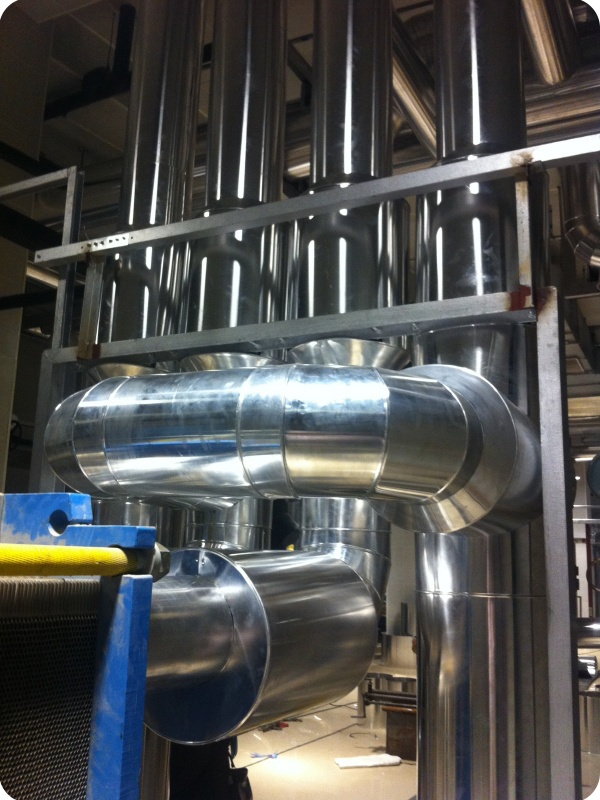
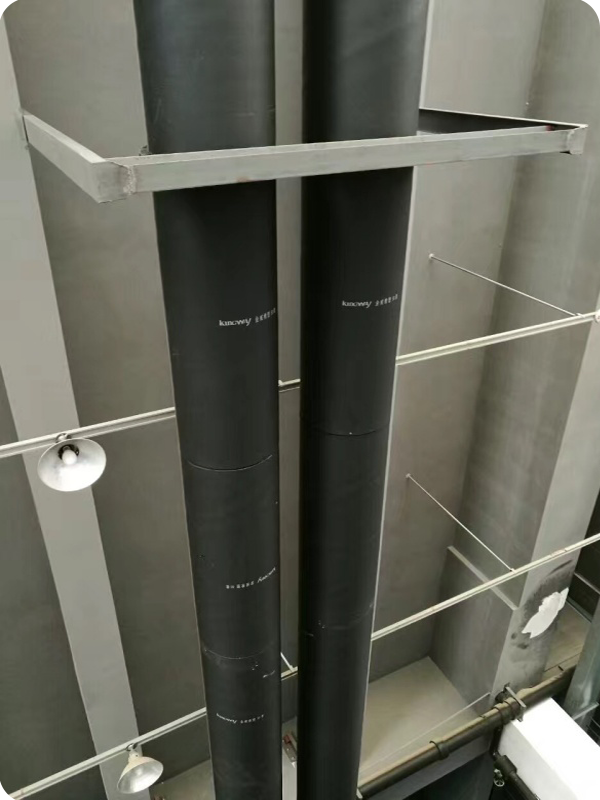
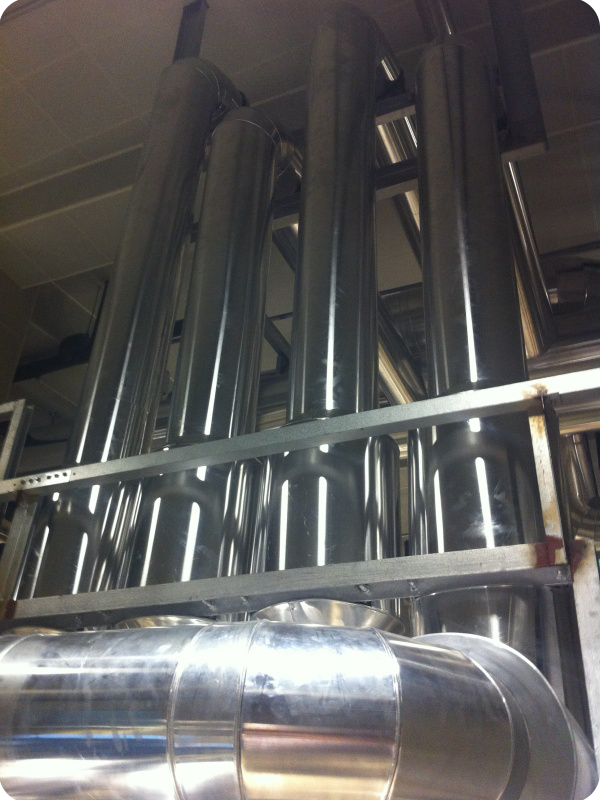
Real-world projects demonstrating the durability and finish of Kingflex elastomeric insulation materials on ducts and process pipes.

Understanding the variable components that drive wholesale pricing structures, export logistics, and total cost of ownership (TCO).
The base cost of elastomeric insulation is tied to global markets for nitrile butadiene rubber, polyvinyl chloride, and specialized foaming agents. Long-term supply agreements and volume ordering help buffer price volatility, ensuring stable, predictable quotes for large-scale construction schedules.
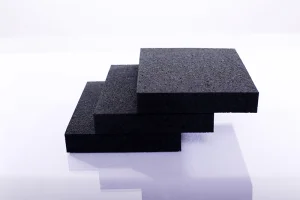
Pricing scales with density and wall thickness. High-density structures (45-55 kg/m³) use more raw material per cubic meter but offer increased physical durability, higher mechanical resistance, and better long-term thermal stability in demanding environments.
Export packaging is optimized to maximize container volume. Flexible rubber foam rolls can be compression-packed to reduce shipping volume, lowering ocean freight costs per unit and decreasing the total landed cost for international buyers.
Detailed technical answers addressing standard specification inquiries, compliance certificates, and installation guidelines.
Browse our specialized product range, featuring advanced acoustic treatments, cryogenic systems, and standard HVAC piping insulation.
 Kingflex