Explore our elite line of elastomeric foam and insulation solutions optimized for global industrial applications.
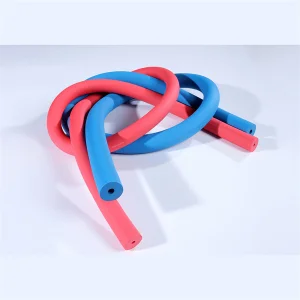
A Whitepaper on Industrial Thermal Degradation, Energy Conservation, and Remediation Strategies
In modern industrial facilities, HVAC structures, and cryogenic storage facilities, a compromised thermal solution poses an immediate risk to operational safety, process efficiency, and environmental compliance. When insulation systems fail, the thermal equilibrium is disrupted, resulting in excessive condensation, runaway energy losses, piping corrosion under insulation (CUI), and potential catastrophic system failures.
A thermal insulation system is classified as "compromised" when its actual thermal conductivity (λ-value) significantly exceeds its design values. This usually occurs due to moisture intrusion. For instance, in chilled water piping or cryogenic setups (such as LNG terminals operating down to -200 °C), the temperature gradient drives water vapor from the ambient air toward the cold pipe surface. If the vapor barrier is breached or if the material itself lacks a high moisture resistance factor (μ-value), moisture accumulates inside the insulation. Since the thermal conductivity of water is approximately 25 times greater than that of dry insulation material, even a minor volume percentage of moisture ingress can degrade the thermal resistance by up to 80%.
Empowering global projects with massive production capacities and proven engineering expertise.

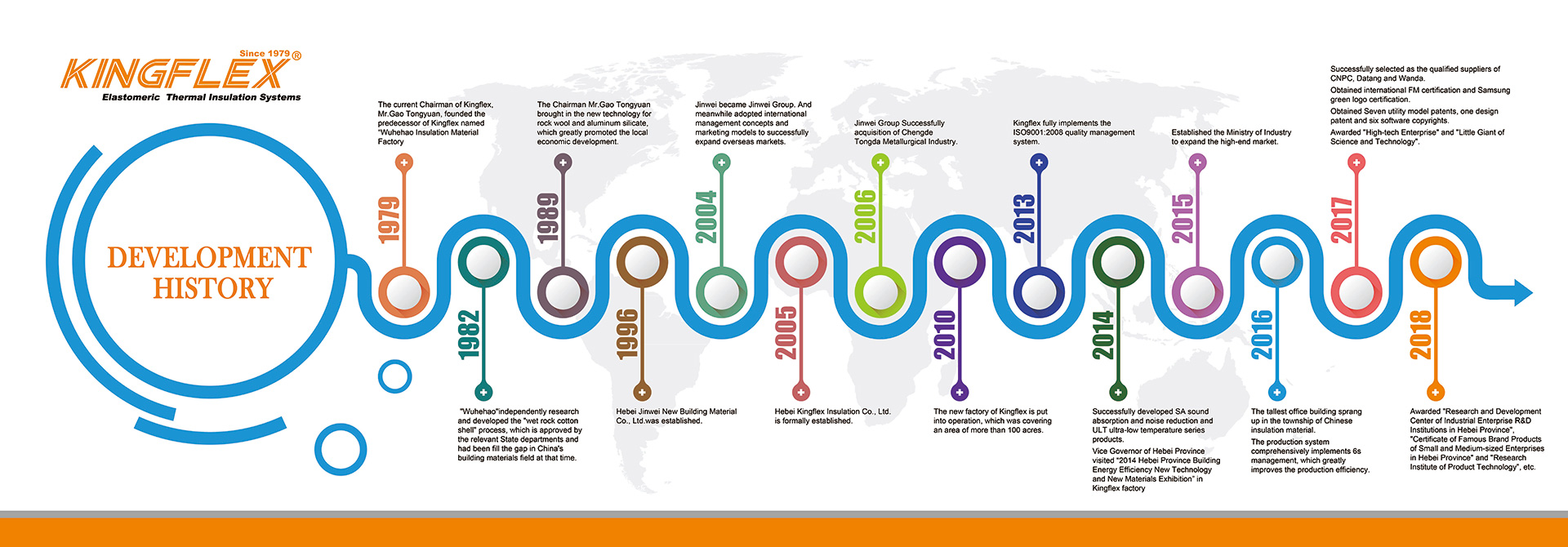
Kingflex Insulation Co., Ltd. is a professional manufacturing and trading combo for high-performance thermal insulation products. Established by the Jinwei Group (Kingway Group), which has a historic trajectory starting in 1979, Kingflex represents the pioneer of thermal insulation materials located north of the Yangtze River.
Operating out of Dacheng, China—the capital of green-building materials—our energy-saving, environmentally friendly enterprise integrates research and development, production, and sales. We take energy conservation and consumption reduction as our core concepts, providing end-to-end guidance from initial consultation and R&D to installation assistance and post-sale service.
A thermal solution is only as reliable as the minds behind it. Kingflex maintains a dedicated workforce of 230 production workers, guided by 8 professional R&D engineers and supported by 6 international sales specialists. This tight-knit, talented team has built an enterprise designated by the Ministry of Energy, the Ministry of Electric Power, and the Ministry of Chemical Industry in China.
Our research and development division focuses on enhancing the chemical formulation of NBR/PVC closed-cell elastomeric rubber foam to ensure it remains stable at temperature ranges spanning from cryogenic (-200 °C) to high-temperature HVAC applications (105 °C).
Discover how Kingflex prevents compromised thermal systems through strict engineering metrics.
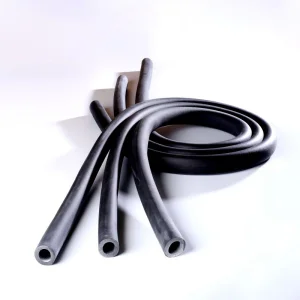
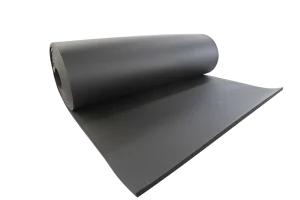
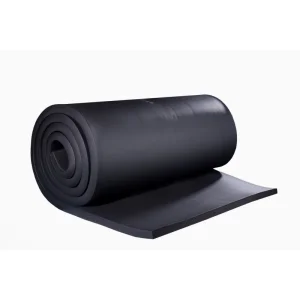
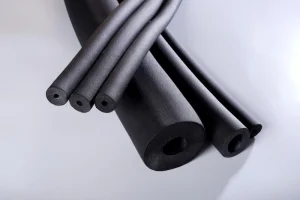
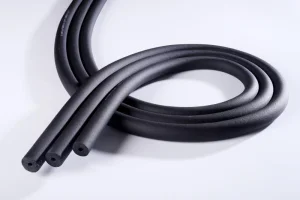
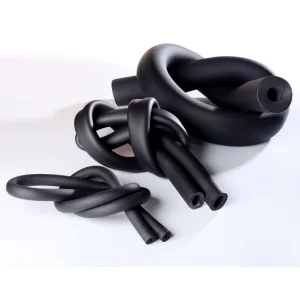
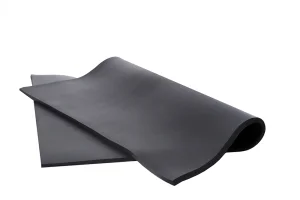
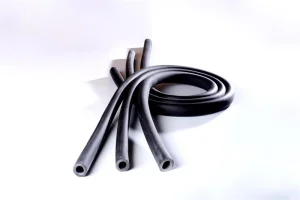
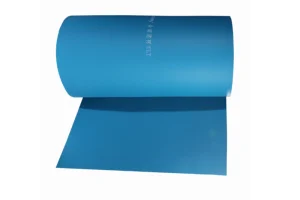
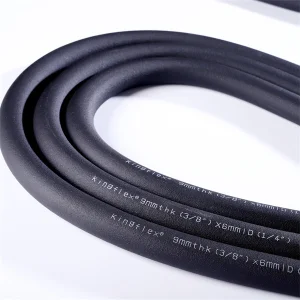
| Parameter Details | Black Rubber Foam Insulation Sheet Roll | Black Rubber Foam Insulation Pipe |
|---|---|---|
| Material Base | NBR/PVC Elastomeric Foam Blend | NBR/PVC Elastomeric Foam Blend |
| Standard Thickness Range | 6mm - 50mm | 9mm - 40mm (Inner Diameter: 6mm - 114mm) |
| Density Range | 40 - 55 kg/m³ | 40 - 55 kg/m³ |
| Service Temperature Limit | -40 ℃ to 105 ℃ | -40 ℃ to 105 ℃ (Cryogenic options down to -200 ℃) |
| Closed-Cell Rate | Over 98% uniformly distributed cells | Over 98% uniformly distributed cells |
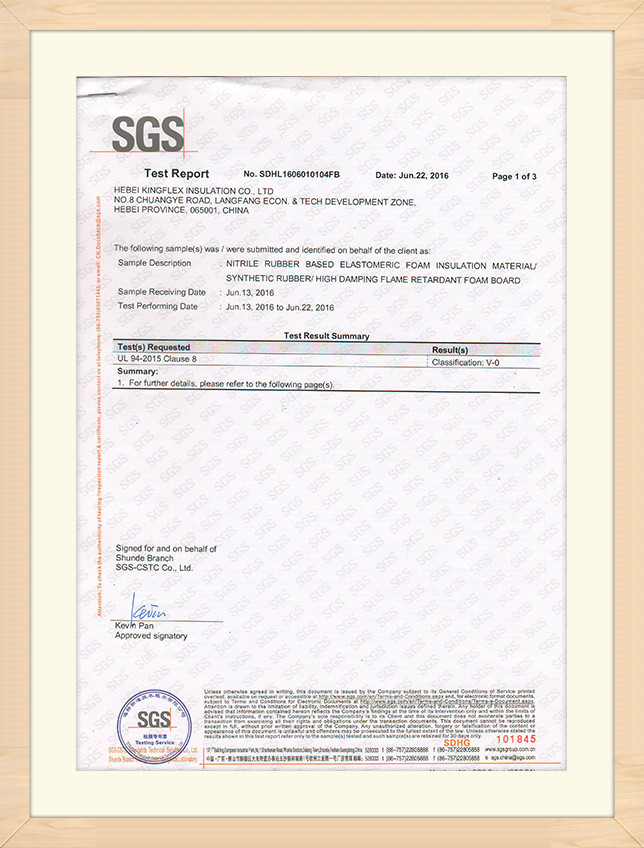
| Flame Retardancy | Class 0 / Class 1 (BS 476, UL94 Compliance) | Flame retardant, self-extinguishing |
By foaming evenly and fully, the closed-cell rate exceeds 98%, creating a physical barrier against heat transfer and moisture migration.
With a compression recovery rate exceeding 80%, the material maintains its critical thickness under physical load, preventing local thermal leaks.
Exhibits superior flame retardant properties. When exposed to fire, the material self-extinguishes without generating toxic dripping hazards.
The shift toward clean energy storage requires high-performing insulation systems.
The clean energy transition has driven rapid growth in the demand for Liquefied Natural Gas (LNG) storage, cryogenic processing terminals, and industrial chemical pipelines. Cryogenic systems operating down to -200 °C present severe thermal insulation challenges. In these sub-zero ranges, standard rubber foam formulations can become brittle and lose their mechanical properties, while moisture ingress leads to rapid ice formation, causing the insulation to crack and disintegrate.
Kingflex has addressed this by engineering specialized cryogenic elastomeric foam insulation systems. By optimizing our NBR/PVC polymer structures, our materials maintain high flexibility at low temperatures, ensuring continuous thermal barrier performance. This system prevents the compromise of cryogenic storage tanks, LNG transport lines, and processing systems, helping operators avoid costly unplanned shutdowns and gas boil-off losses (BOG).

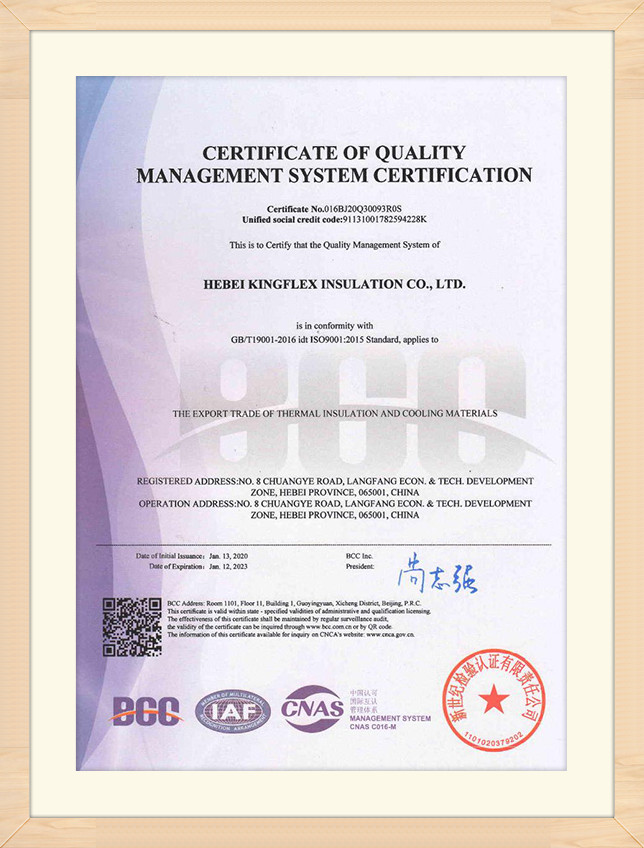
Our commitment to reliable quality control is backed by international testing and compliance certificates. Kingflex materials undergo rigorous testing protocols to ensure they meet and exceed regulatory standards for building and industrial installations across different countries.
With certifications including BS 476, CE, REACH, ROHS, UL94, and ASTM, Kingflex products provide specifiers, contractors, and asset owners with confidence that their systems will remain reliable over a design lifetime of 10 to 15 years.
Our commitment to quality, verified by international testing bodies.


See how engineers and procurement managers around the world evaluate Kingflex solutions.



Where Kingflex rubber foam insulation prevents system thermal degradation.
Prevents condensation drip damage on cold lines and reduces heat gain on warm lines in commercial ventilation networks and duct systems.
Offers corrosion resistance and stable thermal parameters for chemical pipe networks, preventing energy loss in outdoor utility systems.
Designed for applications down to -200 °C, ensuring low-temperature transport pipelines and LNG tanks retain structural and thermal integrity.
Choosing the correct physical dimensions of insulation is essential to avoid system thermal compromise. Inadequate wall thickness leads to condensation issues in high-humidity zones.
Kingflex offers customizable solutions tailored to the heat load, pipe size, ambient humidity, and fluid temperatures of each system. We configure designs to maintain pipe surface temperatures above the ambient dew point, ensuring clean, dry insulation surfaces.

Technical advice and service details from Kingflex engineering team.
A1: It is primarily used for HVAC ducts, air conditioning piping systems, building thermal insulation, industrial cold insulation for process pipelines, and acoustic sound dampening.
A2: Yes, Kingflex rubber foam insulation is fire retardant and compliant with safety codes including BS 476 and UL94, making it suitable for high-density commercial and industrial projects.
A3: Rubber foam features a flexible, closed-cell structure that prevents moisture absorption, making it suitable for cold line condensation control and HVAC. Rock wool is high-temperature resistant and fireproof, typically used for high-temperature steam lines and industrial furnace systems.
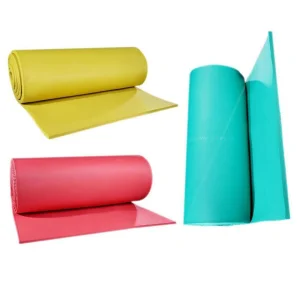
A4: Yes, we provide OEM services, allowing customization of wall thickness, inner diameters, colors, and laminated vapor barriers to meet specific project needs.
A5: Our products have passed BS 476, CE, REACH, ROHS, UL94, and ASTM certifications, ensuring compliance with global environmental and safety standards.
A6: Yes, all Kingflex production lots are coded and traceable from raw material incoming inspection to the final finished product packaging.
A7: We produce sheet insulation thicknesses ranging from 6mm to 50mm to handle varying design conditions.
A8: Under standard operating environments with proper installation, Kingflex products have a service life of 10 to 15 years.
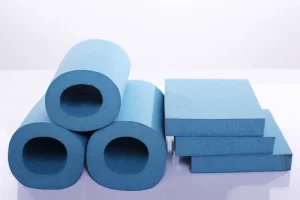
Explore our technical range designed for deep sub-zero and specialized industrial applications.
 Kingflex